
Most conference strategies fail before anyone sets foot on the floor. The thinking goes like this: book a booth, design some merch, wait for people to come by, hand out pens, follow up via email. It's passive. It's forgettable. And at $45K for a small booth at an event like HubSpot's Unbound, it's an expensive way to be ignored.
Don't get me wrong. I have no problems with conferences. The problem is treating them like a transactional channel instead of what they actually are: multi-day, multi-touchpoint opportunities to build real relationships with potential customers.
We learned this the hard way. As a team with engineering and product backgrounds, most of us didn't grow up in sales, or marketing. We were skeptical of the traditional conference playbook. But over years of attending and hosting events, we've developed a framework that works.
Here's what changed everything.
The booth model is broken
Traditional booths make you passive. You pay six figures for the privilege of waiting. You stand behind a table hoping people will wander over. Some do. Most don't. And of those who do, most are motivated by free stuff, not by genuine interest in what you do.
What gets lost in that exchange? Momentum. Qualification. Real conversation.
There's a credibility argument to be made for having a physical presence – a booth signals that you're serious. It's probably the strongest reason for us to consider having a booth in the future. But for now, that credibility comes at a cost: your entire event strategy becomes dependent on foot traffic, on people approaching you, on luck.
Having a limited budget, little to no experience with conferences we decided to ask ourselves a question: what if we treated the conference floor like a bazaar instead of a retail store? What if we moved toward people instead of waiting for them?
Working the floor changes everything. You control the motion. You pick intersections where qualified prospects are already flowing. You can talk to hundreds of people in an hour.
But this only works if you bring something worth talking about.
The philosophy: experiences over merch
Most of what gets handed out at conferences ends up in a waste bin. Another pen. Another stress ball. Another branded notebook that nobody will use. People accept it because they're afraid of saying no, not because they want it.
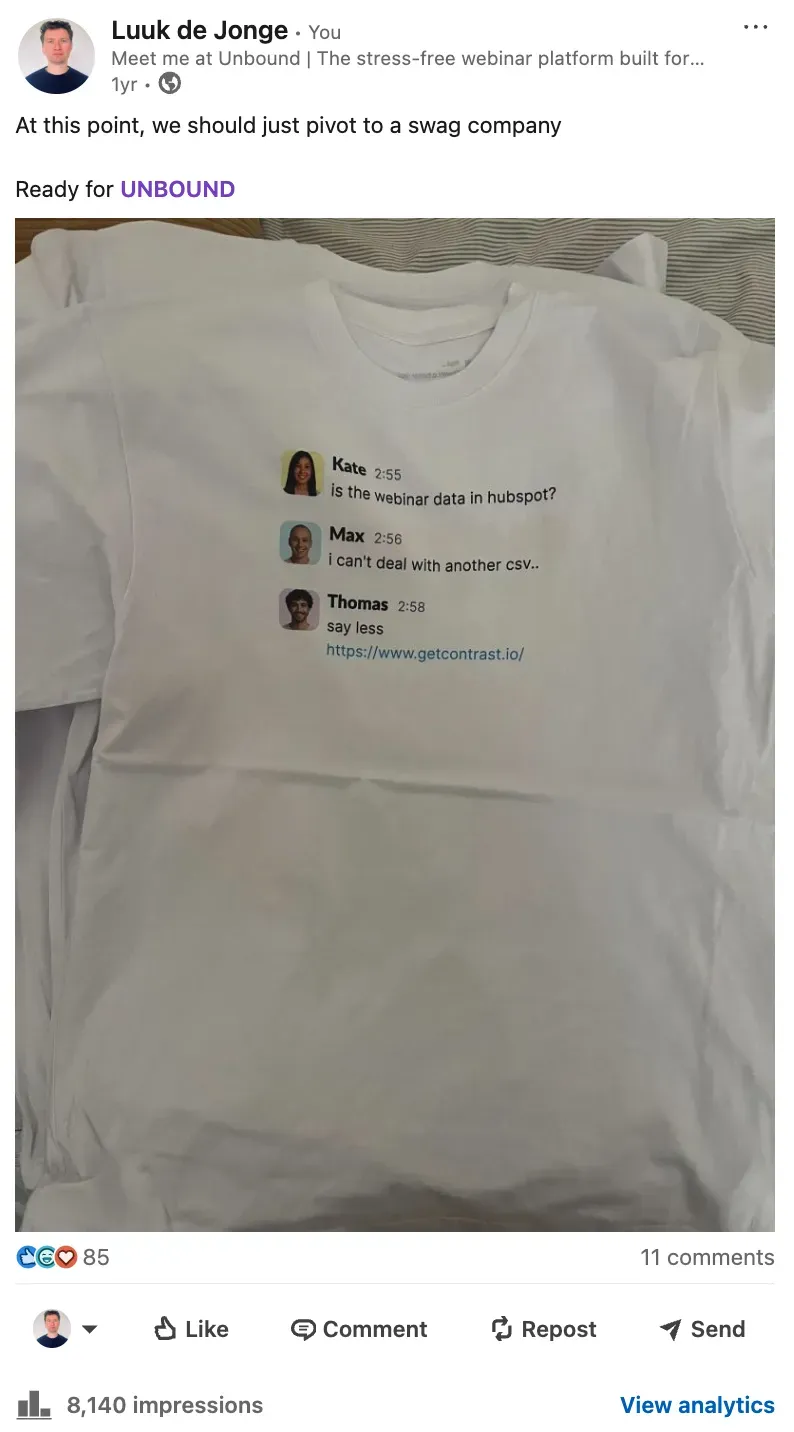
The real problem isn't giving things away. The real problem is giving away things that don't matter.
We started with a simple principle: what would we do if we couldn't buy a booth? How would we connect with our customers then?
That constraint forced us to think differently about three things.
Quality over quantity
In one of our meetings, trying to figure out our first batch of merch someone said "I don't understand why most of here wear nice clothes, great materials and clothes made in a honest way – but we don't want to apply that same principle to our merch" .
This was a turning point. Why can't merch be high quality? Why can't it compete with our regular wardrobe? That proved to be the basis on which we would design, and manufacture anything that we ever associated with the Contrast brand.
When you commit to quality, something shifts. Your customers notice. They use it. They keep it. That branded hoodie isn't trash after the event, it becomes part of their wardrobe.
Quality also forces you to be selective. You can't afford to make 5,000 mediocre items. You make 500 great ones. That constraint becomes a feature: scarcity, intentionality, care. That means you also become more selective in who you give your merch to. Great marketers know it pays to be selective in your ICP.
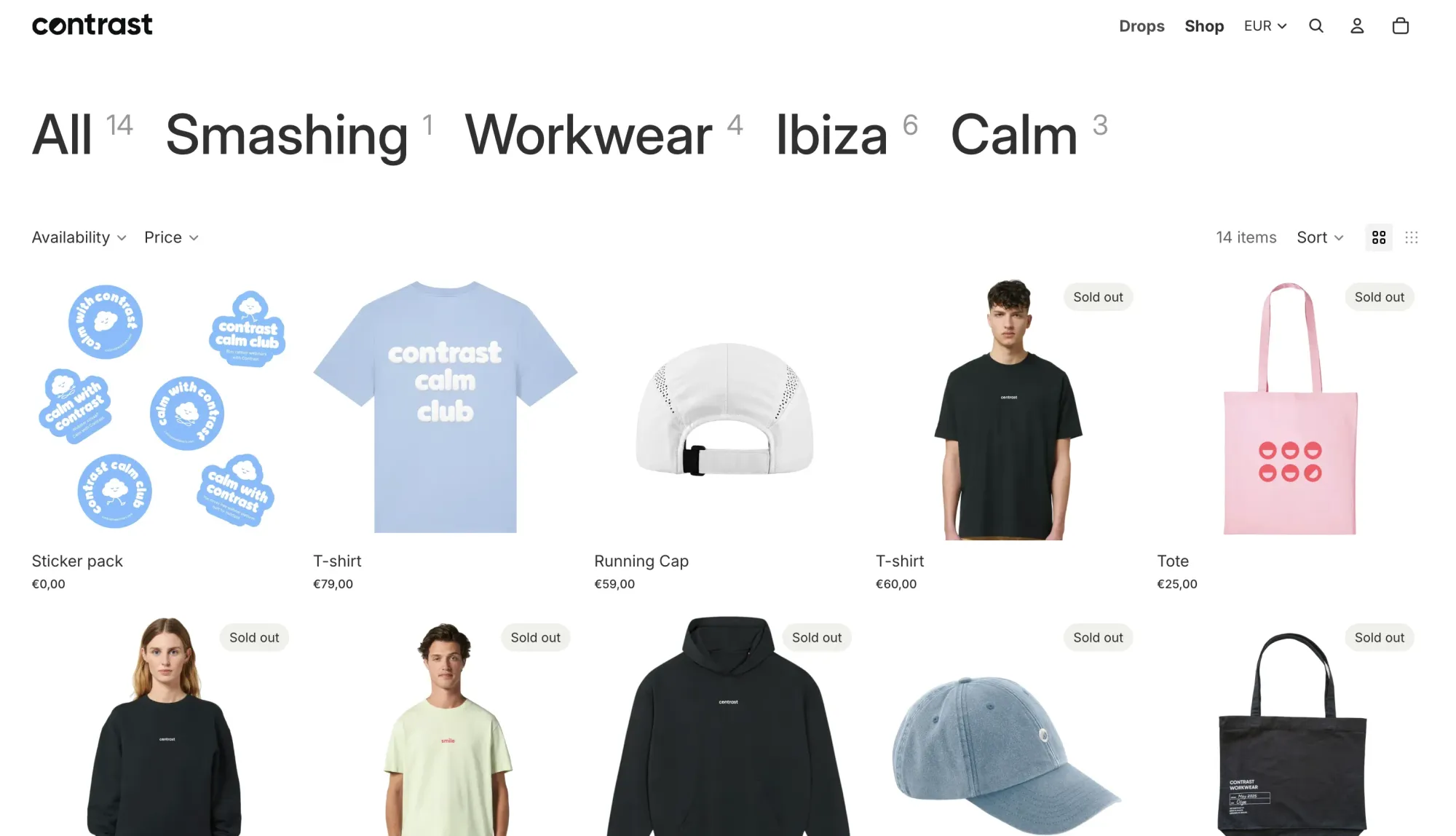
Themes drive coherence
Themes keep decision aligned and the focus sharp. It helps us say no to another 100 other good ideas.
Last year at HubSpot's Inbound in San Francisco, we were the croissant guys. Sounds random. It was. But it worked because we committed to it completely. Every touchpoint echoed the theme. Every piece of merch reinforced it. People didn't remember us as "the HubSpot platform with nice aesthetics." They remembered us as "the team that brought croissants to San Francisco."
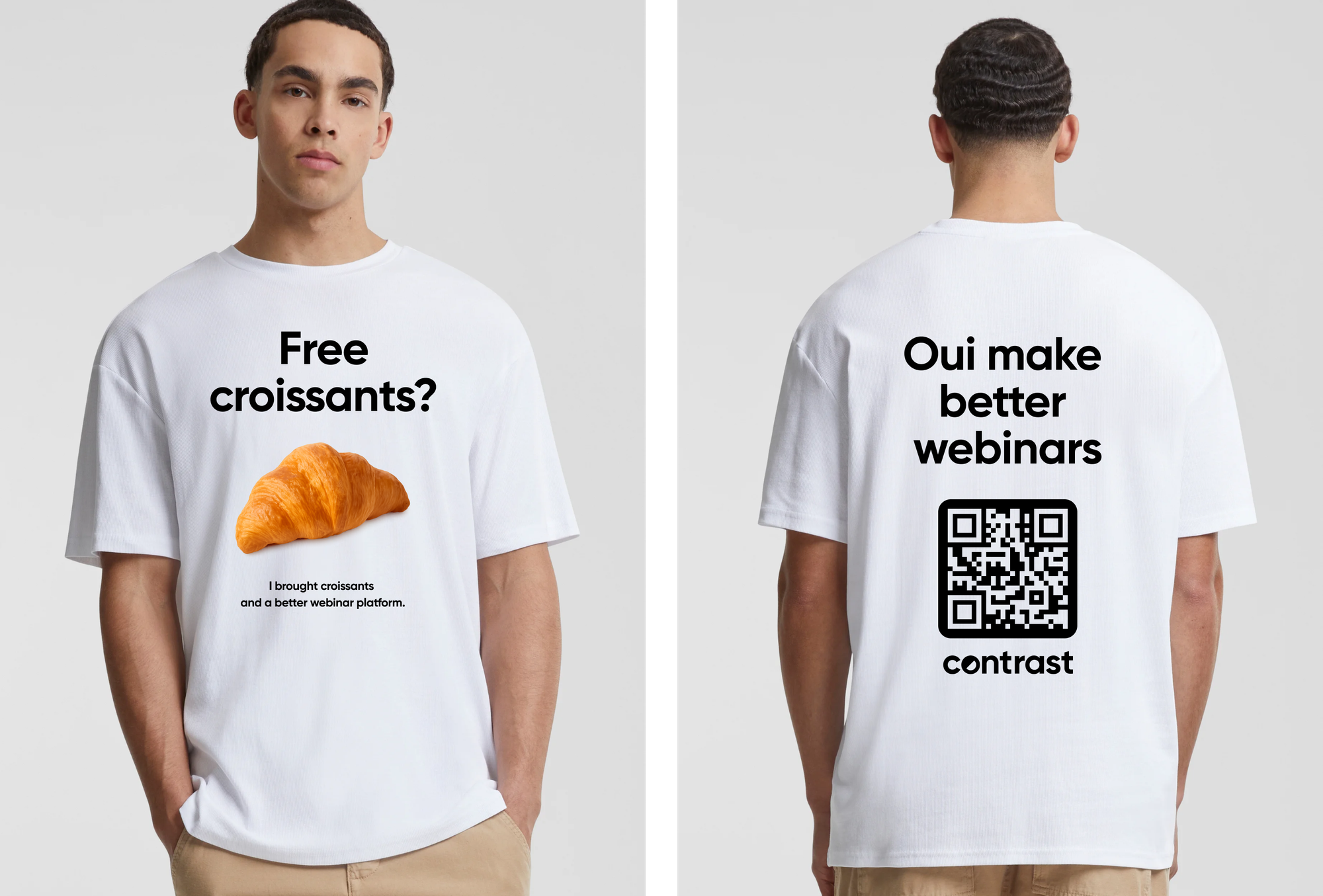
Themes solve a real problem: how do you stand out when everyone at the conference is trying to stand out? You pick something unexpected that has nothing to do with your product, and you lean into it so hard that it becomes your identity at that event.
At another event, in the UK, our theme was smashing webinars. It had a double meaning. On the one hand, we showed the consequence of smashing your computer because of your webinar platform (our competition). At the same time, we provided the solution: a webinar platform that helps you smash your webinars.
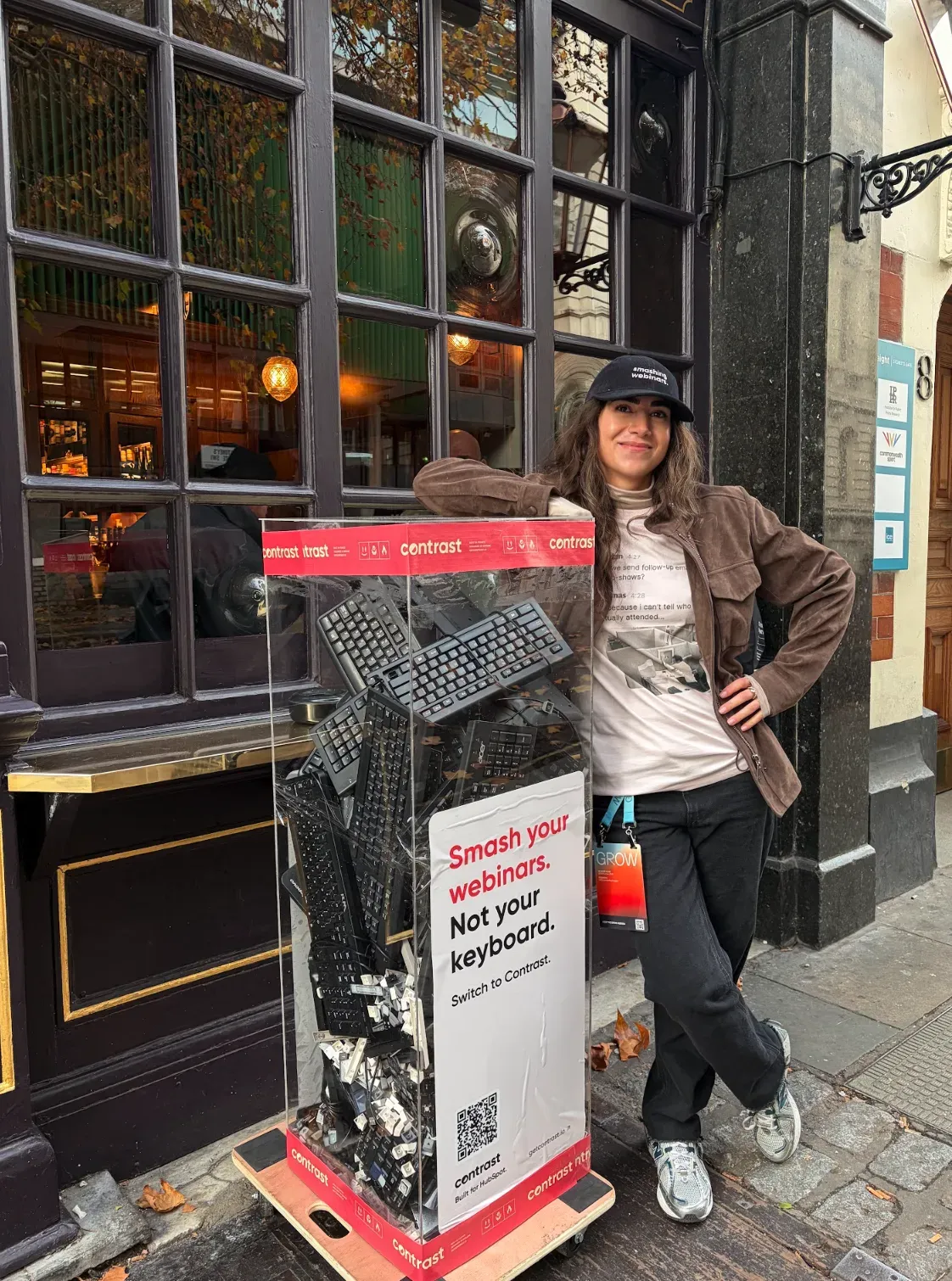
For Unbound 2026 in Boston, our theme is Calm. We know our ICP: young people, mostly in their late 20s and early 30s, busy, fitness-focused, looking to simplify their lives. Conferences are chaos. After-parties are loud. What if we offered the opposite?
Calm is our answer. And everything flows from that.
Love and care matter
Here's something that sounds soft but is strategically important: people can tell when you care about what you're making. This is why new mothers prefer to hoist their babies in the knitter sweater made by their parents, rather than the one bought online.
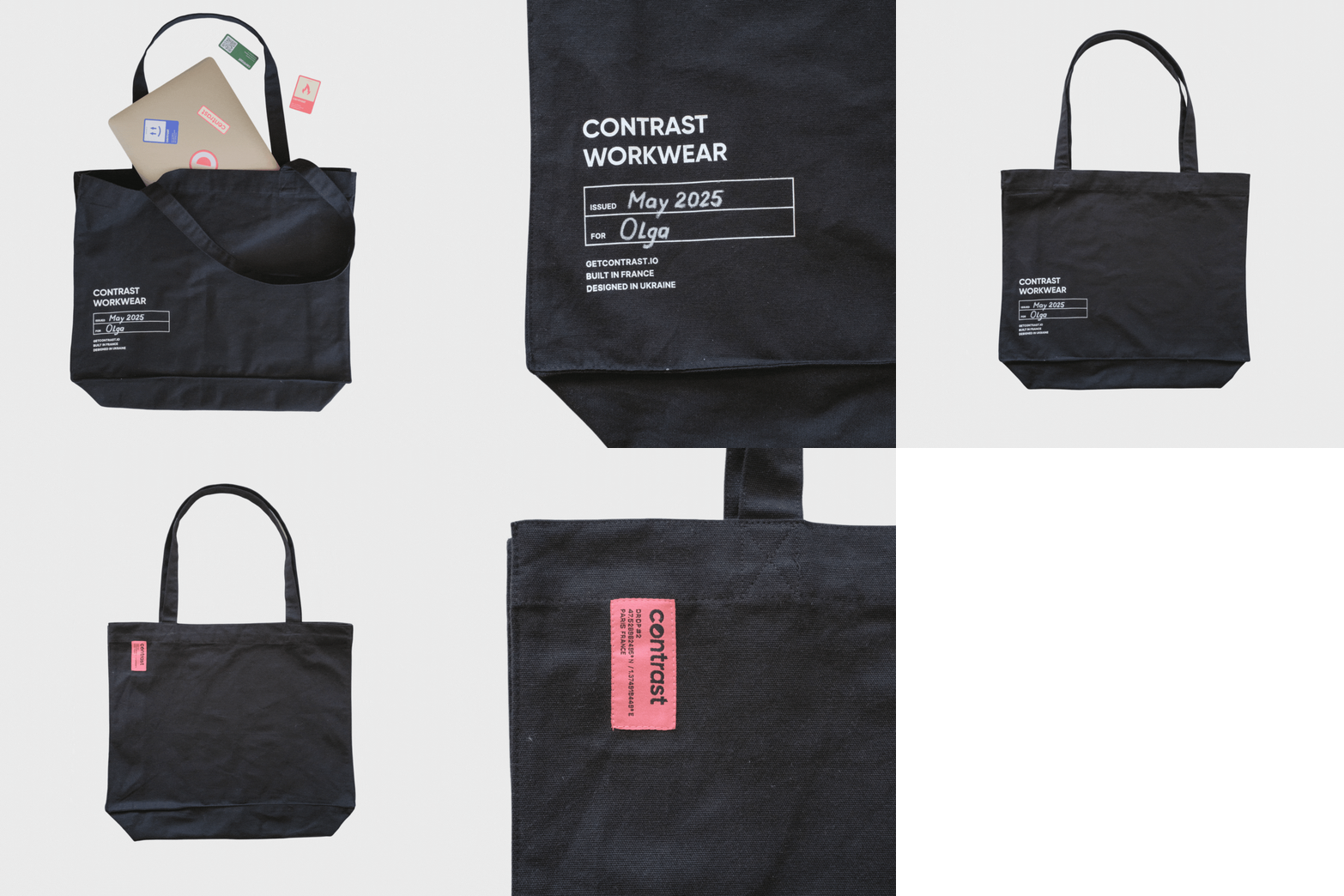
At Contrast, we apply that same principle. We want customers to be proud to use Contrast. That starts with the product. But it extends to everything they associate with the brand. If your merch feels like an afterthought, your brand feels like an afterthought. If your merch is thoughtful, intentional, and beautiful, that says something about who you are.
If you then manage to loop that in through thoughtful experiences, you're creating something that people will remember.
The framework: five touchpoints across time
Time to put things into practice. At Contrast, we think of every event as five distinct phases. Each one is an opportunity to reinforce your theme and move people closer to real engagement throughout real life experiences, sometimes paired with high quality merch to strengthen that experience, or have something to be remembered by.
Phase 1: Pre-event digital (6-8 weeks before)
The work starts before anyone gets to the conference. This is where you introduce your theme and frame the experience.
For Calm, we started on LinkedIn. We posted behind-the-scenes content showing our design process. We talked about what "calm" meant to us as a brand (The stress-free webinar platform built for HubSpot). We showed the merch in progress. We took people on a journey.
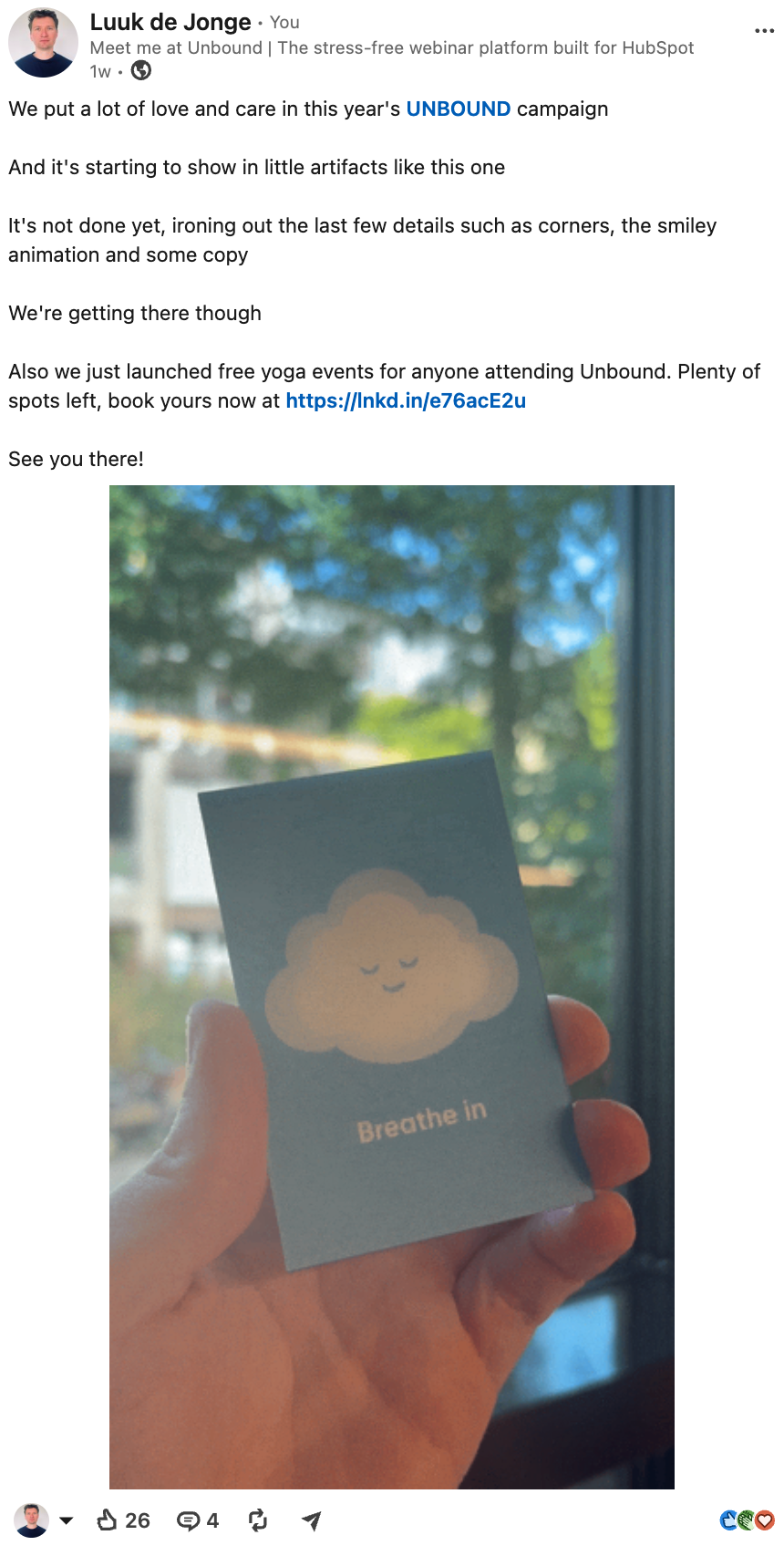
The goal isn't to convince anyone to visit your booth (you don't have one). The goal is to prime recognition. When someone bumps into you on the floor, they already know who you are. They've already seen the work. The recognition does half the work for you.
This phase is also where you build the narrative. It's not sales. It's storytelling. Well, if you do it right of course...
Phase 2: pre-event experience (if applicable)
Some events allow for pre-event activations. Don't miss this.
For Unbound, we're hosting a "Calm" experiences the morning of. Nothing about webinars. There's not even a Contrast employee there. Simply a something our ICP cares about and that fits the theme. A yoga, paid for by Contrast. When people go onto their day, they will receive a Calm Kit to keep that energy high.
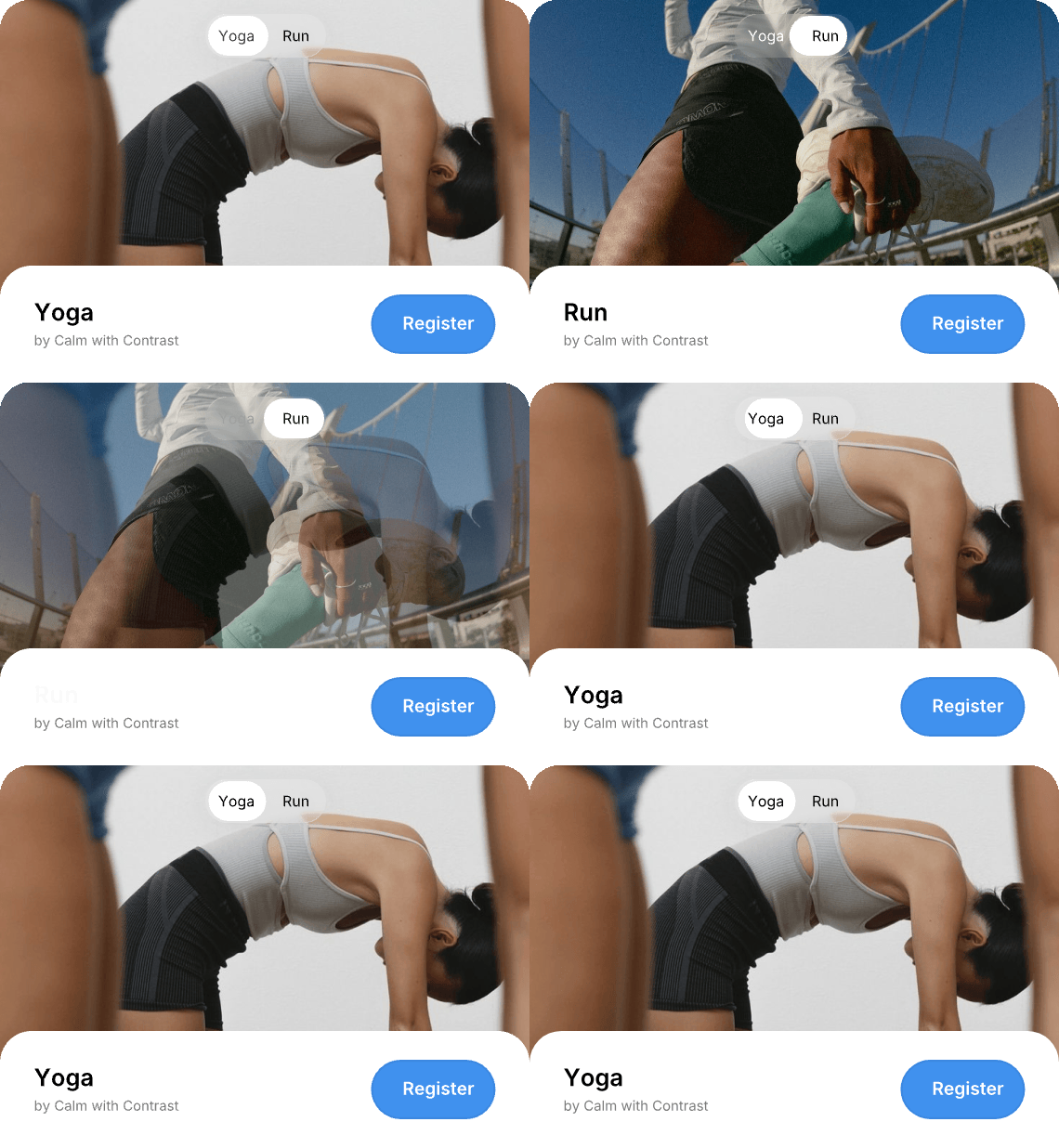
Combined with us working the floor (phase 3) we will still create the connection to people; and the likelihood they engage with us has become significantly higher!
What's best about pre-event experiences is that you're not competing with other companies for people, venues, caterers etc.. for the typical after parties that others companies host.
Phase 3: Day-by-day surprises (during event)
This is where you work the floor. But you're not just handing out merch. You're creating a series of moments.
Our strategy is deliberate scarcity and rotation. Day one, you might encounter us at the main intersection with something specific. Day two, somewhere else with something different. Day three, another surprise. The goal: every time someone runs into Contrast, it's a new experience. It's an invitation to talk again.
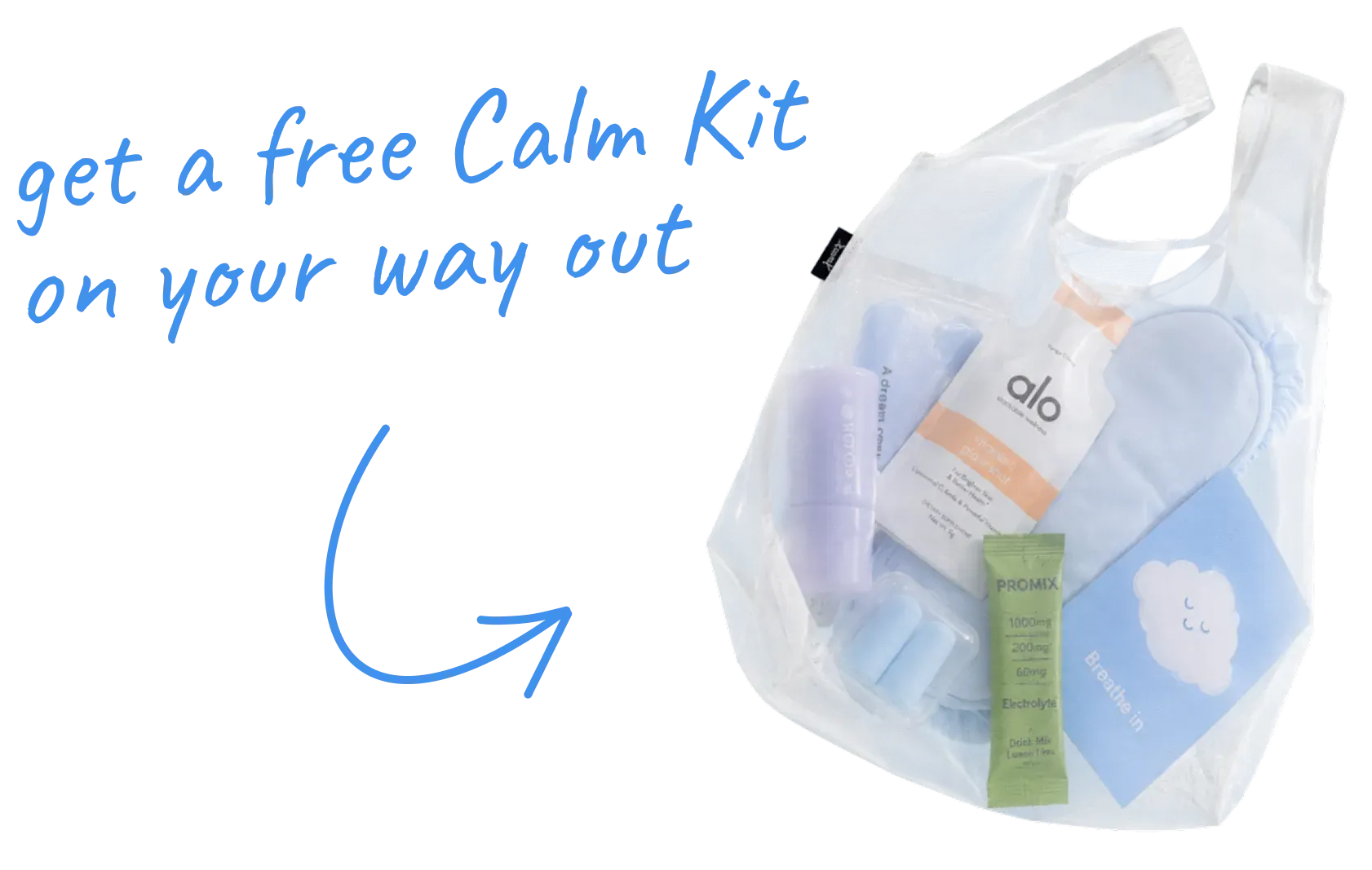
This approach serves two purposes. First, it keeps your brand top of mind without feeling repetitive. Second, it forces better qualification. You're not trying to talk to everyone, you're talking to people who choose to engage with you multiple times.
For Calm, we will offer:
- Day 1: Smoothies at the door and a chance to win a Spa day when you get home
- Day 2: Calm Kits to help you power through this day and the next
- Day 3: Send-off (something to take home that reminds them of the feeling they had at the event)
Each touchpoint is designed to deepen the association between Contrast and calm.
Finally, be sure you have a way of getting noticed. That means, dress the part. Last year at Inbound, remember that we were the croissant guys? There was absolutely no mistaking about it. If you're going to Inbound this year, pay attention to floating balloons.
Phase 4: Working the floor
Here's the tactical stuff.
Position yourself at busy intersections. Places where people are moving between sessions. Places where they're likely to be your ICP. We often find that in between sessions we manage to talk to a lot of people. Or close to the coffee machine. These are natural stopping points for people anyhow. Why not talk to them?
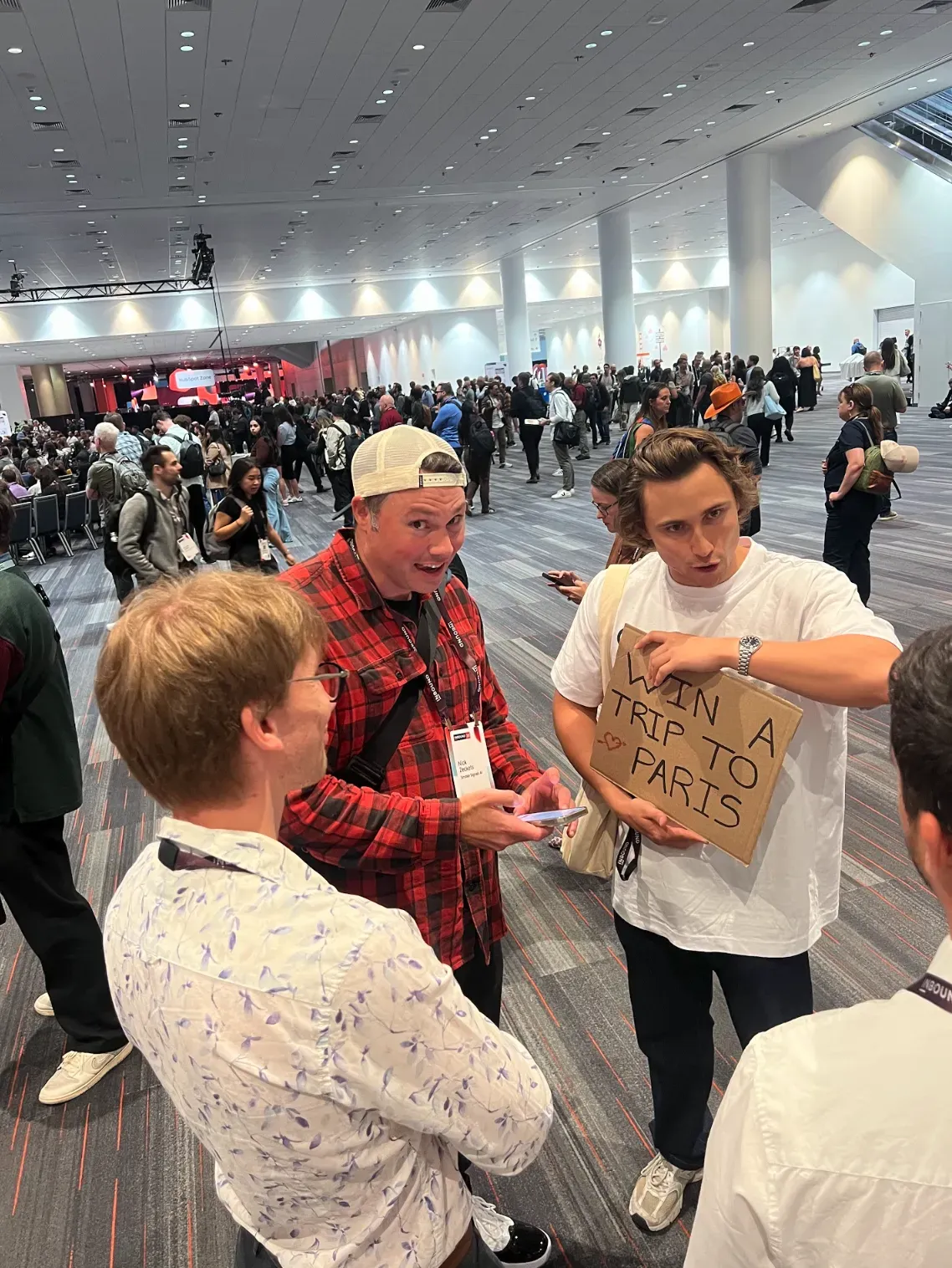
To optimize your (and their!) time, start with a qualifier. "Do you run webinars?" or "Are you managing demand gen?" It sounds simple, but it changes everything. You're not wasting anyone's time. You're not forcing a pitch. You're just checking if there's mutual relevance.
If there is, the conversation flows naturally. Your merch becomes the icebreaker, not the entire interaction. The conversation is what they remember. The merch is is the memory what reminds them of the conversation later.
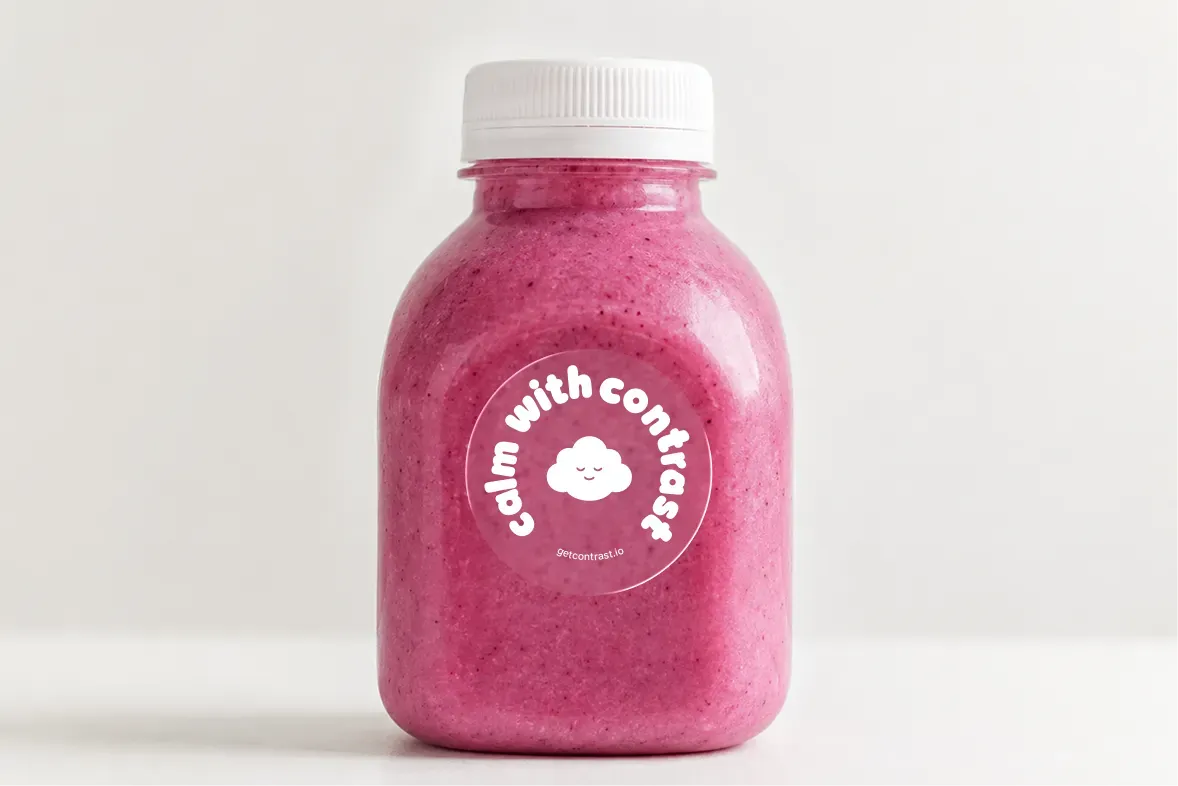
For Unbound, our positioning is: "The stress-free webinar platform built for HubSpot". Everything designed around it is "Calm".
Phase 5: Post-event (weeks after)
I think this is where most event strategies die. People go home. You send a thank-you email. They forget you existed. The lead is somewhere stuck between marketing and sales.
We think about post-event differently. The event doesn't end when they leave the conference. The event ends when the relationship is in motion or it's clear there's no fit. Both are fine. But getting there fast after the event is para-mount. Even though, a year later, we're still closing deals from the event before!
Going back to the croissant example: we collected emails at Inbound. Of course we didn't just didn't ask for their email address in the hope they would share it. We would:
1. Qualify them: do you run webinars?
2. Brief pitch and;
3. Ask them: if they wanted to learn more in exchange for a big box of frozen croissants?
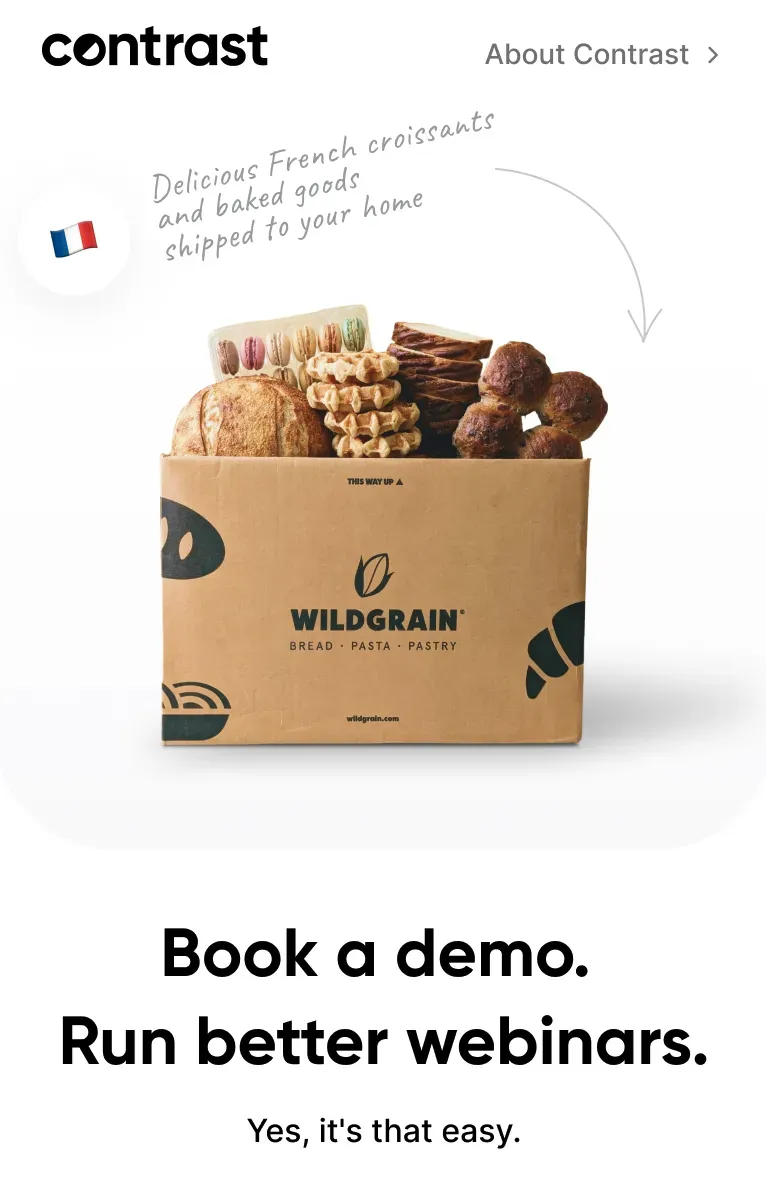
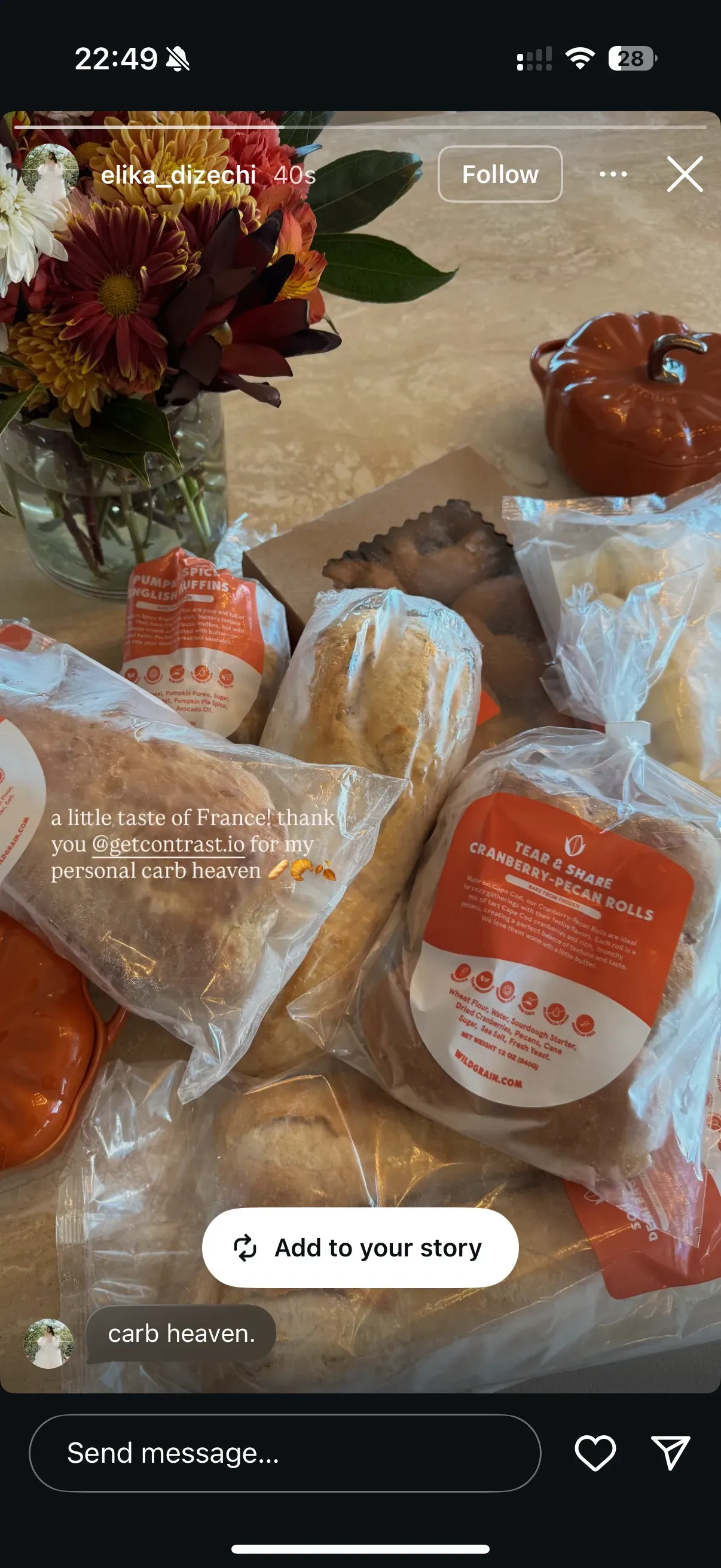
Two weeks later, we shipped frozen croissants to people's homes. A tangible reminder that we're different. And it reopened the conversation about webinars naturally. Sure, some people ghosted us – but would that not have happened anyway?
I LOVED the croissants – and so did my family. They used to hate me leaving for conferences. This time they said, I could go whenever, as long as I bring back home a box of these delicious croissants.
For Calm, we're exploring similar ideas. A spa credit. A meditation app subscription for a month. Something that continues the feeling. Something that gives you a reason to reach out again without it feeling like a sales motion.
Post-event experiences create a natural bridge for follow-up. "Hey, did you get the spa credit? We'd love to show you how Contrast works when you have time."
Common mistakes
Mistaking merch for strategy
Merch is a tactic. It's not a strategy. If your event plan is "design cool merch and hand it out," you don't have a plan.
Strategy is: how do I position myself relative to my customer at each stage? How do I create multiple reasons for engagement? How do I make it impossible for them to forget about us?
Merch serves that strategy. But it's not the strategy itself.
And you better be sure you know how to design that merch. Our designer Olga wrote a cool article on our design process.
Forgetting about your ICP
We know our ICP. Mostly young people, late 20s–early 30s, fitness-focused, value simplicity (and a whole lot more ;-)). Everything we do at events is designed for them. Not for everyone. Not for the broadest appeal. For the specific people we want to work with.
That specificity is a feature, not a bug (hehe, do you see my product background?) It makes every decision clearer. It makes your event presence coherent. It makes your merch actually resonate instead of being one more thing people don't want.
Over-investing in the booth
Yes, there's a credibility argument for having a booth. But is six figures the only way to signal credibility? We don't think so. If you're going to spend that money, you better articulate what it's actually buying you. Is it foot traffic? How much? Is it a place to sit? That's a small price for what you're paying.
We're betting that credibility comes from the quality of your presence, not the square footage of your space. From the conversations you have, not the table you're standing behind.
That bet hasn't failed us yet. Is this strategy viable for the future of Contrast? Probably not. But I'm sure when the day comes that we want to have our booth, we'll apply the same principle and original thinking to designing that booth, uhh.. experience.
Treating the event as transactional
The worst event strategies treat the conference as a hunting ground. Get in, collect leads, get out. It's predatory. It's obvious. And it doesn't work.
Instead, treat the event as a chance to be genuinely useful. To create an experience that people actually enjoy. To connect with people in a way that feels real, not manufactured.
That shifts everything. Your merch becomes a gift instead of bait. Your conversations become genuine instead of performed. Your follow-up becomes welcome instead of intrusive.
A framework you can use
Here's how to apply this to your next event:
Step 1: Pick your theme (Week 1) Choose something unexpected but connected to your values or your customers' lives. Not your product. Something human. What does your ICP care about? What's missing from the conference experience?
Step 2: Map your touchpoints (Week 2-3)
- Pre-event digital: What story do you want to tell? Where will you tell it?
- Pre-event experience: Is there an activation you can host?
- Day 1, 2, 3: What's different each day? What's the surprise?
- Post-event: How do you extend the feeling after they leave?
Step 3: Design merch that fits (Week 3-4) Don't design merch and then retrofit a theme. Design within the theme. Every item should feel like it belongs. Quality over quantity. Useful over novelty.
Step 4: Brief your team (Week 4) Everyone who's working the floor needs to know: what's our positioning? Who are we talking to? What's the conversation starter? What's the merch?
Step 5: Execute and iterate (During Event) Pay attention to what works. Which positions get the best conversations? Which merch items create the most engagement? What surprises land? Use that to adjust Day 2 and Day 3 (I hope your conference does not last longer than that!)
FAQ
Should we get a booth?
Not necessarily. Ask yourself: what problem does it solve that working the floor doesn't? Credibility? There are other ways to signal that. A place to sit? Rent a small table. But a full booth at full price? Only if you can articulate a real ROI beyond "we'll look more official."
How much should we spend on merch?
However much creates quality items that fit your theme. That might be $2K for a small event or $15K for a major conference. The number matters less than the alignment. If your merch is great and on-theme, every dollar works. If it's generic, no amount is enough.
What if we're not good at working the floor?
Start with a qualifier. "Do you run webinars?" is not a hard pitch. It's a yes/no question. If yes, the conversation flows. If no, you've been respectful of their time. Practice it before the event. You'll get better.
How do we measure success?
Conversations, not booths visits. Hot leads, not registrations. Post-event engagement, not demo requests. Track: how many relevant conversations did we have? How many of those turned into meetings? How many meetings turned into customers? That's the frame. From there it's also easy to calculate your ROI.
Can we reuse the same theme for multiple events?
Yes. The theme becomes your identity. But you can have sub-themes. Calm might be your umbrella. But at HubSpot Unbound it's "calm yoga focus." At a sales conference it's "calm in chaos." The core stays the same. The application shifts.