
The phrase "fireside chat" has meant different things across different eras.
In the 1930s, it referred to Franklin D. Roosevelt's radio addresses to a nation navigating the Great Depression. Speaking directly, as if to a friend by the fire rather than to a country in crisis, Roosevelt delivered 31 broadcasts between 1933 and 1944. The White House received ten times its normal mail volume in the days that followed each one.
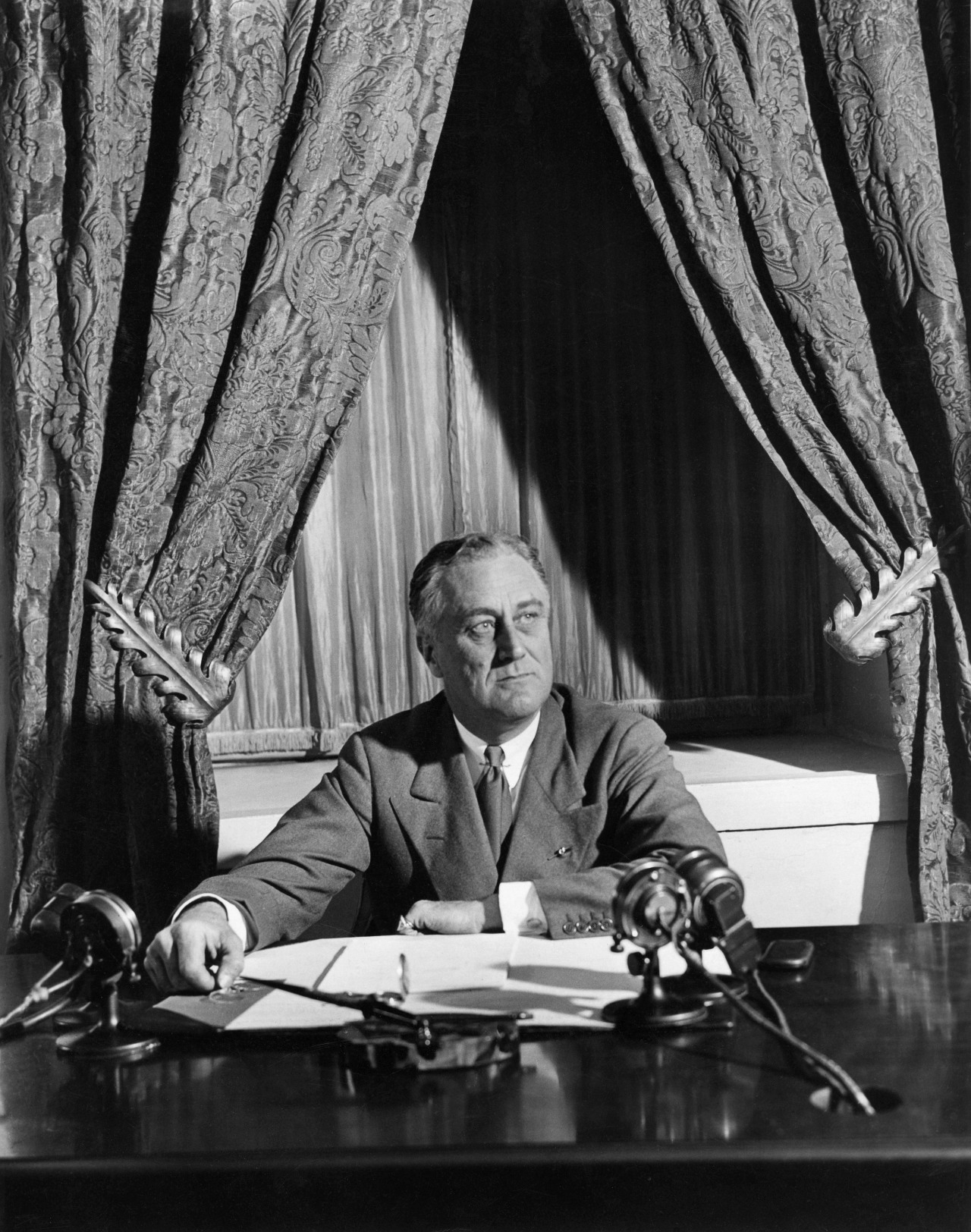
The term stuck and migrated. Today, in business, a fireside chat has nothing to do with radios or presidents. It describes a moderated, informal conversation between a host and a guest, usually conducted in front of a live or virtual audience. The format is defined less by its structure than its tone: direct, conversational and deliberately unscripted.
This guide covers what the fireside chat format actually means in a B2B context, how it differs from a panel discussion or keynote, the variants worth knowing, and what it takes to run one well as a virtual event.
Fireside Chat Definition: What It Actually Means in Business
A fireside chat is a one-on-one conversation between a host and a single guest, facilitated in front of an audience. The host asks prepared questions; the guest responds based on personal experience and perspective. The audience observes, and, in most modern formats, participates through live Q&A.
The defining characteristic is tone. Unlike a keynote, where one person delivers prepared material, or a panel discussion, where multiple experts debate a topic, a fireside chat is structured around a single voice and a single conversation. The guest is not expected to have slides, a rehearsed narrative, or a polished argument. They're expected to think out loud.
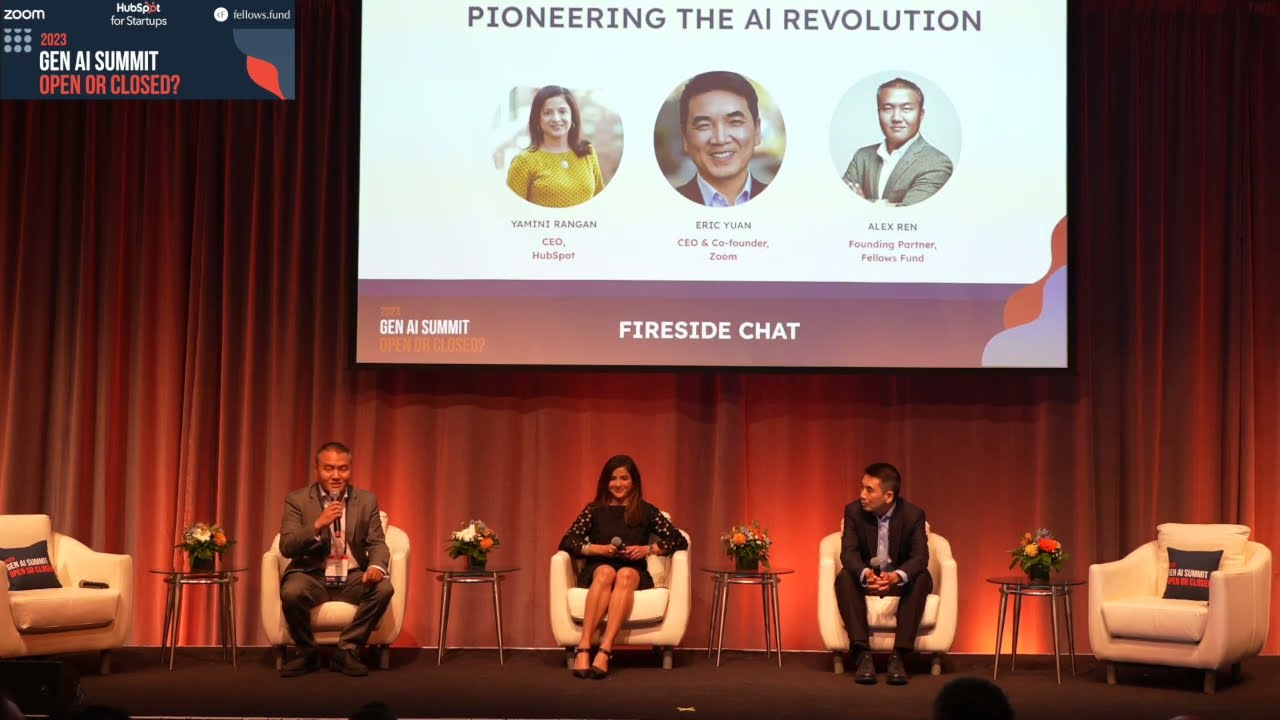
The word "fireside" is doing specific work in the name. It signals warmth, informality and directness, a deliberate contrast to the stiffness of a conference stage or a boardroom presentation. Whether the event is in-person, virtual, or a webinar, the format is designed to feel like a candid interview rather than a performance.
In practice, fireside chats appear in three main contexts:
- B2B conferences and events: A session format where a prominent practitioner, founder, or industry voice is interviewed on stage. Common at SaaStr Annual, HubSpot UNBOUND and Dreamforce, where the format has become a staple of the main stage program alongside traditional keynotes.
- Webinars and virtual events: A company hosts an industry expert or customer for a live conversation, streamed to a registered audience.
- Internal company events: A CEO or executive is interviewed by a facilitator, typically in an all-hands or town hall format — the same structure, applied inward.
This article focuses on the webinar and virtual event context, which is where most B2B marketing teams encounter and use the format.
Fireside Chat vs. Panel Discussion vs. Keynote
These formats are frequently confused and occasionally misnamed. Here's where they differ:
| Format | Participants | Structure | Audience Role |
|---|---|---|---|
| Fireside chat | 1 host + 1 guest | Conversational, guided questions | Observer + live Q&A |
| Panel discussion | 1 moderator + 3–5 experts | Multi-voice debate | Observer + live Q&A |
| Keynote presentation | 1 presenter | Scripted, often with slides | Passive observer |
| Interview webinar | 1 host + 1 guest | Structured interview, may use slides | Observer + live Q&A |
The fireside chat and interview webinar are close enough that practitioners often use the terms interchangeably. The distinction, when one exists at all, tends to be tonal: an interview webinar leans slightly more formal (pre-set questions, tighter structure), while a fireside chat emphasizes spontaneity and the host's ability to follow interesting threads wherever they lead.
The distinction from a panel discussion is more meaningful. Panels create breadth — multiple perspectives in dialogue. Fireside chats create depth, sustained exploration of how one person thinks. Panels work best when the topic benefits from genuine disagreement. Fireside chats work best when the audience wants to understand one person's experience and judgment.
The distinction from a keynote is straightforwardness itself: keynotes are rehearsed, fireside chats are directed but not scripted.
Why B2B Marketing Teams Use Fireside Chats
The format has earned its place in B2B event marketing for a practical reason: it works differently than other formats, and it works in a specific way.
When a respected practitioner, someone your audience already follows, already trusts, sits down with your company and has a genuine conversation, the effect is immediate. The credibility isn't manufactured; it's borrowed. The guest isn't endorsing your brand in any explicit sense. They're just showing up, sharing their thinking, in a context you've created. That association carries real weight for an audience that's grown selective about what they give their attention to.
The data supports this. For example, when hosting webinars, companies who bring in a guest or co-presenter see 23% higher engagement rates than those running solo sessions. Educational and thought leadership formats, which is what a fireside chat inherently is, generate 53% more ROI than product demonstration webinars.
There's a structural reason behind those numbers. Product demos, however good, are fundamentally self-referential. Fireside chats are not. The guest's expertise belongs to them, not to the host company. That independence is what makes the audience lean in.
For demand generation specifically, the format slots into a marketing campaign logic rather than a content calendar logic. One B2B SaaS team planning their webinar program described their approach: fireside chats running every four to six weeks, each episode designed as a lead magnet, promoted across paid channels, gated for registration, and treated as the centrepiece of their demand gen strategy rather than a supporting content piece.
That framing matters. A fireside chat treated as "a webinar we don't have to make slides for" will disappoint. A fireside chat treated as a marketing campaign, with deliberate guest selection, promotion strategy, and post-event follow-up, will consistently outperform.
Fireside Chat Formats for B2B Teams
Within the broader format, there are four variations worth knowing. They share the same structural DNA but serve different goals.
1. Thought leadership interview
The most common variant. A practitioner or industry voice is interviewed about their experience, their process, a specific decision they made, or a view they hold that's genuinely counter-intuitive. The goal is insight, not product. This format is best for top-of-funnel brand building and reaching audiences who don't yet know you exist.
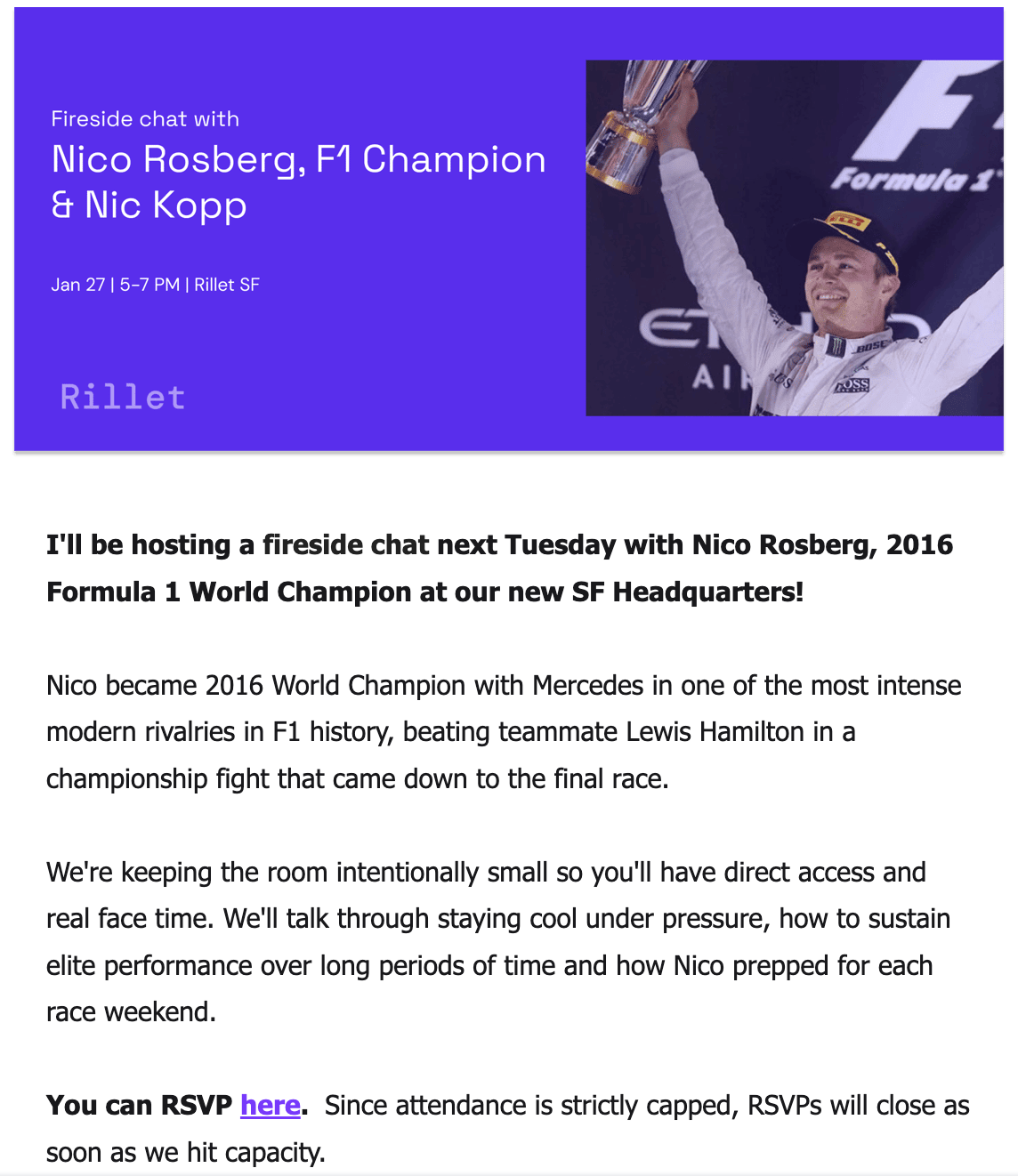
It works when the guest has something specific and differentiated to say. It fails when the guest defaults to safe, consensus-level answers that any practitioner could have given.
2. Customer story conversation
The host interviews a customer about a specific challenge they faced and how they addressed it. More credible than a polished case study video; more specific than a testimonial. The format's informality often makes it easier for the customer to be honest about what went wrong before things went right.
Here's an example of a customer story from Olivia, talking about how she's using Contrast to turn her webinars into weeks of content.
The quality ceiling here is specificity. A customer who says "we saw significant improvement" has nothing to offer an audience. A customer who says "we went from 4% attendance-to-MQL conversion to 18% after changing our follow-up segmentation" is doing the audience a service.
3. Partner co-host session
Two companies co-host a session, each bringing their audience. The guest represents one company; the host represents the other. The goal is shared reach — each side expands its audience by associating with someone the other's audience already trusts.
Audience overlap matters more than raw size. A niche audience that's deeply engaged with your category generates more qualified registrations than a large audience that's loosely interested in your partner's general space.
4. Recurring interview series
The highest-leverage version of the format. A company establishes a named, regular series, same host, same format, rotating guests each episode. The host becomes recognizable; the series builds an audience that returns.
French HR-tech company Epsor built this model into their core content program. Their recurring interview format, L'Addition, positioned their CEO as a consistent, recognizable host across bi-weekly episodes. Each episode generated hundreds of registrations and created the kind of compounding audience attention that one-off events don't produce.
This model requires more upfront commitment: the host needs to be genuinely good on camera, the format needs enough consistency that returning audiences know what to expect, and guest selection has to be disciplined. But for teams running four or more webinars per year, a recurring series turns individual events into a program.
How to Run a Virtual Fireside Chat
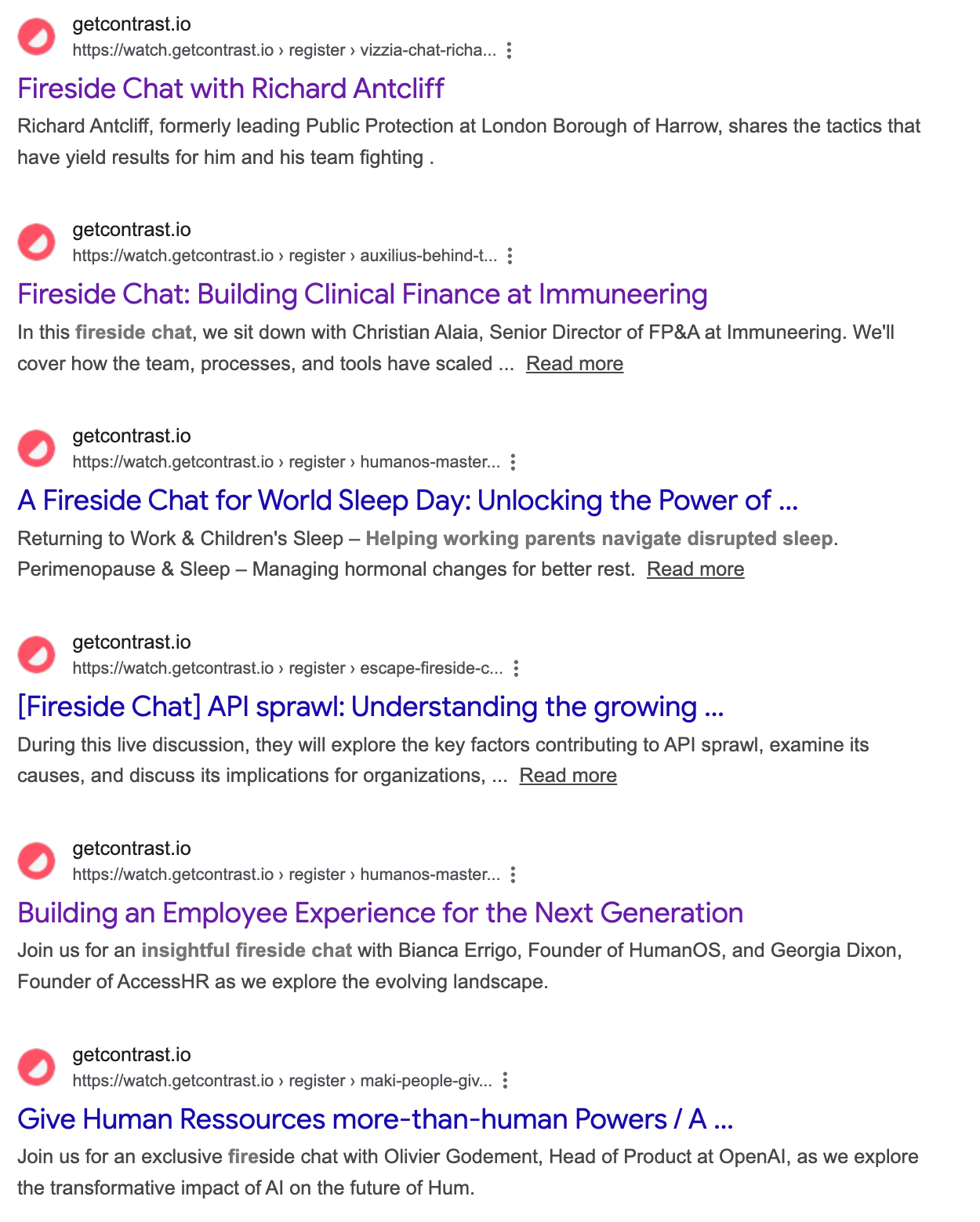
Running a fireside chat well is harder than it looks. The format's informality creates space for authenticity, and the same space for a session to drift, stall, or turn into something the audience didn't show up for. Running a virtual fireside chat is arguably easier than one in real life – and let this be the exact thing we specialize in. So let's look at how it's hosted best.
Choose your guest with a specific outcome in mind
Your guest determines the ceiling of the session. Reach for someone with a concrete point of view that's actually differentiated, not an expert who says what everyone else in the category says, but someone who has made a call others haven't, arrived at an unusual conclusion through real experience, or is willing to discuss what they got wrong.
Check whether they've appeared in live content before. Some audiences are engaged in live formats; others aren't. Past behavior is the best proxy.
Write your questions like chapter markers, not a list
Most fireside chats are under-prepared in a specific way. The host arrives with a list of questions. Questions are useful; structure is what the audience needs.
Think about your questions as the agenda items of the conversation, each one should advance the narrative and tell the audience where the session is going. "Tell me about your experience with X" is a question. "You rebuilt your entire webinar program from scratch in six months and attributed 20 customers directly to it, I want to understand the single decision that made that possible" is a structure. One gives the guest an open field; the other gives them a target.
Integrate Q&A throughout, not just at the end
The conventional format saves audience questions for the final 15 minutes. This is the dead zone, the part of the session where energy consistently drops because the main conversation has wrapped and the audience isn't sure what it's waiting for.
Pin a question from the audience during a virtual fireside chat
A more effective model: collect questions throughout the session, surface them during natural pauses in the conversation ("someone in the chat is asking..."), and weave them into the dialogue rather than batching them at the end. This keeps the audience active and also tends to produce better questions — people ask what's actually on their minds rather than whatever they can formulate quickly when the host suddenly opens the floor. This is of course a lot easier during an online fireside session than one in real life.
This matters because virtual audiences begin to disengage around the 22-minute mark of a passive session. The back-and-forth between host and audience resets that rhythm.
Stay at 45 minutes
Sixty-minute fireside chats are rarely 15 minutes better than 45-minute ones. The natural arc of a well-run conversation reaches its depth point around 35–40 minutes. Extending past that usually means repeating earlier themes or asking questions with diminishing returns. Sessions at or under 45 minutes also see higher attendance rates than those scheduled for a full hour.
Brief your guest properly before you go live
A well-briefed guest performs at a different level than one who walks in cold. Send your questions at least 48 hours in advance, not because you want scripted answers, but because you want the guest to have retrieved their best examples before the pressure of a live session.
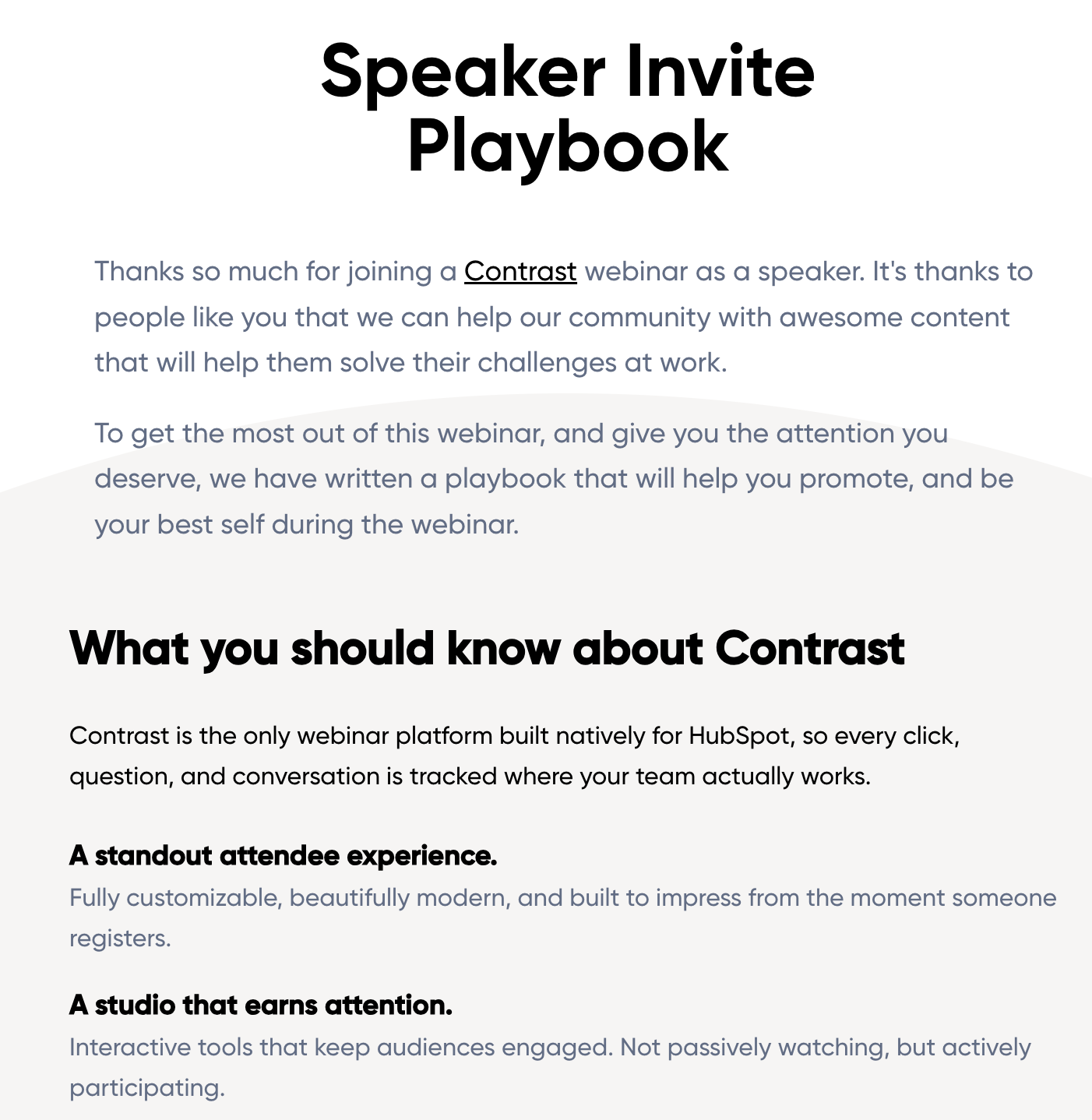
If you're hosting an online fireside session, meet for 15 minutes before the session to confirm audio setup, walk through the format, and agree on any territory that's off-limits. If you're hosting on a webinar platform, use private messaging to communicate with your guest during the session without the audience seeing, useful when an answer needs redirecting or a thread is running long.
Choose the right platform for your fireside chat
Hosting a virtual fireside chat starts with choosing the right platform. Look for one with engagement features that create a real sense of conversation between the audience and speaker, things like live chat, Q&A, and the ability to pin questions on stream so the flow is never disrupted. Contrast Webinars is built for exactly that. Book a demo to learn how Contrast can help you run your next fireside.
Where Fireside Chats Go Wrong
Turning it into a product pitch
The format loses its credibility the moment either participant starts steering toward a sales narrative. Audiences recognize a pre-planned endorsement when they see one. The fireside chat works because it signals genuine exchange. Once that's gone, so is the attention.
One pattern that destroys this particularly fast: the host who keeps redirecting the guest's answers toward their own company's product. The audience didn't register to watch a company interview itself.
Treating the host as a passive conduit
Some hosts interpret "conversational" as "ask a question, then get out of the way." A strong fireside chat host is actively managing the conversation, following threads that are genuinely interesting, redirecting those that aren't, and ensuring the session moves through a coherent arc rather than wandering.
Saving the audience for last
Q&A at the end of a 55-minute session is a structural afterthought. If audience questions are part of what makes this format valuable, treat them as an active ingredient rather than a closing courtesy.
Running it as a content event rather than a marketing campaign
The fireside chat is a lead generation mechanism. Promote it like one. Treat the registration list as a marketing asset. Segment your follow-up based on who attended, how long they stayed, and what they asked.
Running a Virtual Fireside Chat
For teams running fireside chats as webinars, the platform shapes how the conversation actually feels, for the host, the guest, and the audience watching.
The mechanics that matter most: the ability to manage who's on screen in real time, handle audience Q&A in a way that integrates into the conversation rather than sitting separately in a chat sidebar and make post-event content repurposing straightforward. A well-run fireside chat with a guest worth hearing produces clips, quotes, and written content that outlive the event itself.

Frequently Asked Questions
What is the meaning of "fireside chat" in business?
A fireside chat in business is an informal, moderated conversation between a host and a single guest, conducted in front of a live or virtual audience. The term derives from Franklin D. Roosevelt's 1930s radio broadcasts, which were designed to feel direct and personal rather than presidential. In modern business contexts, it refers to any structured interview-style session, common at conferences, webinars, and company events, where the goal is to surface a guest's genuine thinking rather than a prepared presentation.
What is the difference between a fireside chat and a panel discussion?
A fireside chat features one host and one guest; a panel discussion features one moderator and multiple experts. Fireside chats create depth with a single perspective. Panels generate breadth across different viewpoints. Panels work best when the topic benefits from genuine disagreement or multiple frameworks; fireside chats work best when the audience wants sustained access to how one specific person thinks.
What is the difference between a fireside chat and an interview webinar?
The terms are often used interchangeably. When a distinction is made, it tends to be tonal: an interview webinar may follow a tighter structure with predetermined questions, while a fireside chat emphasizes the host's ability to follow interesting threads as they emerge. In practice, the format is the same — one host, one guest, a live audience, and a conversational structure.
How long should a fireside chat be?
45 minutes is the practical ceiling for most fireside chats. This allows enough time for a structured conversation with meaningful depth while staying within the window where audience attention is naturally sustained. Sessions scheduled for 60 minutes often see the final 15 minutes lose energy as the conversation runs out of new ground.
What makes a good fireside chat question?
A good fireside chat question is specific rather than open-ended. It gives the guest something concrete to respond to, a particular decision, a failure, a result, a moment, rather than an invitation to summarize their career. The best questions also create forward momentum: they signal where the conversation is going and give the audience a reason to stay for the answer.
Can a fireside chat be pre-recorded?
Yes. Pre-recorded fireside chats trade the spontaneity of a live session for tighter production quality. The conversation still happens in real time between host and guest; it's then edited and published rather than streamed live. For teams that want the format but can't coordinate schedules for a live event, pre-recording is a practical alternative, though it removes the live audience participation that makes the format distinctive.