
Most teams that book a "roundtable" end up running a panel with a smaller guest list. Same hierarchy, same moderator-fields-questions-to-experts structure, just fewer chairs. That's not a roundtable. It's a small panel, and treating it like a roundtable is why so many of them fall flat: the format promises peer conversation and delivers a mini-lecture instead.
The mix-up is understandable. A sales team pitching a "these runners like fireside chats, there might be some slides, there might be someone presenting" format is describing three different discussion-based webinar formats in one sentence. But the confusion has a real cost: get the structure wrong and you either over-produce a format that should feel informal, or under-moderate one that needed a firmer hand.
What is a roundtable discussion?
A roundtable discussion is a many-to-many conversation among peers with roughly equal standing on the topic, guided by a moderator whose job is to keep the conversation balanced rather than to direct it toward pre-set audience questions. Academic treatments of discussion formats, including a widely cited comparison of panel discussions, roundtables, symposia and colloquia, draw the same line: a panel is built around a moderator soliciting distinct expert viewpoints for an audience, while a roundtable is built around participants working through a shared problem together, with the moderator functioning more as a referee than a host.
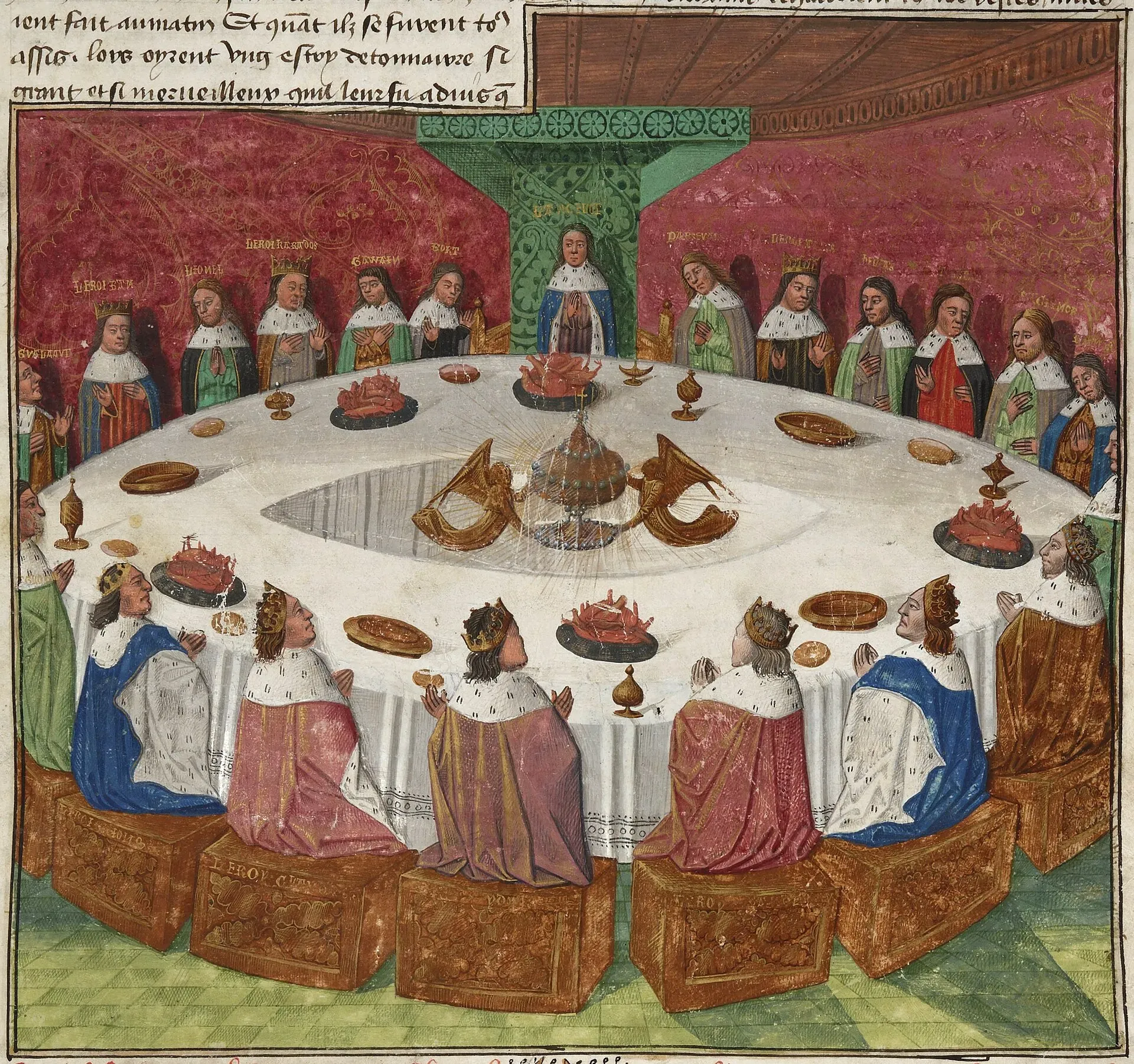
That distinction matters more than it sounds like it should, because it changes almost every production decision downstream.
Roundtable discussion vs. panel discussion
The practical differences:
- Who's chosen: A panel deliberately mixes perspectives — you want disagreement built in. A roundtable usually pulls people from the same niche who are there to think through a problem together, not represent opposing camps.
- Who talks to whom: In a panel, the moderator routes audience questions to the right expert. In a roundtable, participants talk to each other; the audience (if there is one) watches a conversation rather than a Q&A relay.
- What "good" looks like: A panel succeeds when each expert's distinct view lands clearly. A roundtable succeeds when the group actually arrives somewhere — a shared insight, a sharper framing of the problem — that no single participant had walking in.
If you're planning a session with clearly opposing viewpoints and a live audience firing questions at named experts, you want a panel discussion, not a roundtable. If it's one host and one guest working through a single narrative rather than a group, that's closer to a fireside chat. A roundtable is neither, it's the format for when a small group of peers needs to actually work through something together. If that's what you're planning, keep reading.
Round table meeting size: why smaller is the point, not a compromise
A roundtable typically runs 4 to 8 participants plus a moderator, larger than the 3-4 panelists a panel discussion needs, but capped well before it turns into a broadcast. That cap isn't a limitation to work around. It's the mechanism that makes the format work: past 8 or so, equal participation collapses, quieter voices go quiet permanently, and you're back to running a panel by accident.
This is worth saying plainly, because most virtual event advice treats a small, capped guest list as a compromise. It isn't. UserGuiding's Joud Ghazal made the sharper version of this point about audience size generally: a 70-person session with the right people in the room produces more pipeline than a 1,000-person session with mixed intent.
A roundtable takes that logic further, it's not just a smaller room, it's a room selected specifically because everyone in it has something to contribute to the same problem. That selection work matters more here than for almost any other format: finding the right participants means prioritizing complementary expertise on the same problem over big names or broad appeal.
It still pays off in attention, Content Marketing Institute research found that 53% of content marketers rated guest-speaker sessions as their best-performing content in the past year, and Forbes' communications council makes the same point more bluntly: stars attract stars, and the quality of who's in the room shapes the quality of who shows up to watch. Treat the size cap as a feature you're protecting, not a number you're trying to grow past next quarter.
How to moderate a virtual roundtable discussion
The moderation mechanics that make panel discussions work, bringing speakers on stage one at a time instead of dumping everyone into frame simultaneously, staying backstage until it's your moment to redirect, never sharing your own opinion, apply here too, but the stakes are different. A panel moderator manages hierarchy: expert, expert, expert, audience. A roundtable moderator manages the absence of hierarchy, which is harder, because there's no natural "next speaker" to hand off to.
Three things matter more in a roundtable than they do in a panel:
Draw out the quiet ones deliberately
With peers instead of a moderator-fielded structure, the two most confident people in the room will naturally fill all the airtime unless someone interrupts that pattern. Have a direct line ready — "we haven't heard from [name] on this yet" — and use it before the conversation calcifies around two voices. This isn't just etiquette: research on virtual meeting dynamics links effective sessions directly to how deliberately inclusive and comfortable-to-contribute-to they feel, not to how expert the participants are.
Pre-brief harder than you would for a panel
Panel participants generally know they're there to represent their own point of view. Roundtable participants need to understand upfront that they're there to build on each other, not perform individually, otherwise you get four solo answers to the same question instead of one conversation.
Keep the tension productive, not personal
The best moderator technique for interview-style formats, positioning participants at opposite ends of a spectrum so the conversation has somewhere to resolve, works for roundtables too, just applied across the whole group instead of one guest. A roundtable with zero disagreement isn't collaborative. It's an echo chamber with a moderator.
Running this virtually, a backstage green room where invited participants wait off-camera until they're brought into frame keeps the "one at a time" structure of the entry: participants join the studio, stay backstage in a private speaker chat to coordinate, and only appear on the live layout when the moderator brings them forward, the same control panels use to avoid the on-screen pileup that turns any multi-speaker format into cross-talk. A studio that supports up to nine people at once without per-seat costs means the room can hold your full 4-8 participant target plus moderator with headroom, without needing to upgrade plans for a bigger guest list.
Structuring the conversation without killing the informality
A roundtable's defining risk is that "informal" quietly becomes "unstructured," and unstructured conversations wander. The fix isn't a rigid agenda, that defeats the format, it's a loose spine:
- Open with the shared problem, not introductions. State what the group is actually there to work through in one sentence, then let participants introduce themselves in the context of that problem rather than reciting titles.
- Sequence 2-3 sub-questions, not a full script. Each one should be broad enough that any participant can jump in, not narrow enough that it reads like an interview question aimed at one person.
- Use on-screen chapter markers if you're recording for replay, they let you navigate a loosely structured hour-long conversation later without forcing rigid segments live.
- Close by naming what the group actually arrived at. If nobody can articulate what changed between the opening question and the closing minute, the roundtable didn't do its job, it was just a friendly chat with a topic label.
Bring audience Q&A into this carefully, if you include a live audience at all. Promoting upvoted chat questions onto the screen works well for panels because it routes outside questions to the right expert. In a roundtable, an unfiltered flood of audience questions can hijack a conversation that was supposed to be peer-led, curate harder, and consider batching audience questions into one dedicated segment rather than threading them throughout.
Live Q&A on Contrast
What to do with a small, high-intent room afterward
The tradeoff for capping a roundtable at 4-8 participants (plus whatever live audience you allow) is fewer total attendees than a broadcast webinar. The upside is that everyone in that smaller room chose to be there for the specific problem being discussed, which makes the follow-up work differently than it would for a large webinar.
Score engagement the same way you would for any high-intent virtual session: who asked a question, who stayed for the full session, who clicked a resource link. With a roundtable's naturally smaller pool, that data is more actionable per person, not less, you're not sorting a thousand names into three buckets, you're deciding exactly which dozen people get a specific, personal follow-up referencing what they actually said. Repurposing the recording matters here too: a well-run roundtable produces sharper, more quotable moments than a scripted panel, because nobody's reading from prepared remarks.
Take snippets from your roundtable recording using Contrast
Common mistakes
Inviting a panel's worth of opposing experts and calling it a roundtable. If the goal is showcasing distinct viewpoints for an audience, that's a panel with a different name on the calendar invite — run it like one.
Skipping the pre-brief because "it's informal." Informal tone, not informal preparation. The conversations that actually go somewhere are the ones where every participant showed up already knowing what problem the group was solving.
Letting the room grow past 8 to accommodate one more good name. Every additional seat past that point trades participation depth for guest-list size. If someone's too valuable to leave out, consider whether the session is actually a panel now.
Treating audience Q&A the same way you would in a panel. An unfiltered question queue can turn a peer conversation into an audience-directed one — curate it, or cut it.
Measuring success by attendance instead of what the group produced. A roundtable's win condition is a sharper collective answer than any one participant walked in with, not a registration number.
Run Virtual Roundtables with Contrast
Contrast is the modern platform to host your next virtual roundtable on. With its studio, it's easier than ever to create a professionally, branded and smooth roundtable experience for your viewers.
Book a demo and learn how Contrast will elevate your roundtable
FAQ
What is a roundtable discussion? A roundtable discussion is a many-to-many conversation among peers with roughly equal standing on a topic, led by a moderator who balances participation rather than routing questions to individual experts. It's structurally different from a panel discussion, which is built around a moderator soliciting distinct expert viewpoints for an audience.
What is a round table meeting? A round table meeting is the same format applied to an internal or B2B working session rather than a public event — a small, capped group of peers working through a shared problem together, typically without a large watching audience. The "round table" framing signals equal footing among participants rather than a presenter-and-audience structure.
How many people should be in a roundtable discussion? Most roundtable discussions work best with 4 to 8 participants plus a moderator. Beyond that range, equal participation breaks down and quieter voices stop contributing, which undermines the format's core purpose.
What's the difference between a roundtable and a panel discussion? A panel discussion is built around distinct, often opposing expert viewpoints presented to an audience and routed through a moderator. A roundtable discussion is built around peers working collaboratively toward a shared answer, with the moderator balancing participation rather than directing it toward audience questions.
Can a virtual roundtable discussion work with a live audience watching? Yes, but the audience should watch the peer conversation rather than drive it. Curate audience questions into a dedicated segment instead of threading them throughout, so the group discussion isn't constantly redirected by outside input.
How do you keep a virtual roundtable discussion from feeling unstructured? Use a loose spine instead of a rigid script: open with the shared problem the group is solving, sequence two or three broad sub-questions the whole group can engage with and close by naming what the conversation actually arrived at. The goal is enough structure to stay purposeful without scripting away the informality that makes a roundtable different from a panel.