
Webinars have become one of the most effective tools for affiliate marketers. They combine education, engagement, and sales into a single format. When done right, they outperform most other marketing channels.
The numbers confirm this shift: according to Shopify, 83% of marketers now use affiliate programs to drive brand awareness, while the industry is projected to grow at an 18% annual rate through 2032. This trend is accelerating. In October 2025, Gap Inc. launched a cross-brand creator affiliate platform spanning Old Navy, Gap, Banana Republic, and Athleta, signaling that even legacy retailers now prioritize performance-based creator partnerships.
This guide covers everything you need to know about affiliate marketing webinars. Whether you want to promote affiliate products through webinars or launch your own affiliate program, you will find actionable strategies here. The focus is on what actually works for marketing teams looking to scale revenue.
What are the benefits of affiliate marketing webinars?
Affiliate marketing webinars offer unique advantages that other channels cannot match. They create deeper engagement, build trust faster, and convert at higher rates. Understanding these webinar benefits helps you make better decisions about your marketing strategy.
The following sections break down why webinars work so well for affiliate promotions. Each benefit connects directly to measurable business outcomes.
Why webinars outperform other affiliate channels for engagement
Most digital marketing touchpoints compete for divided attention. Your audience scrolls through feeds, checks emails, and multitasks constantly. Webinars are different. Attendees actively choose to dedicate 30 to 60 minutes to your content.
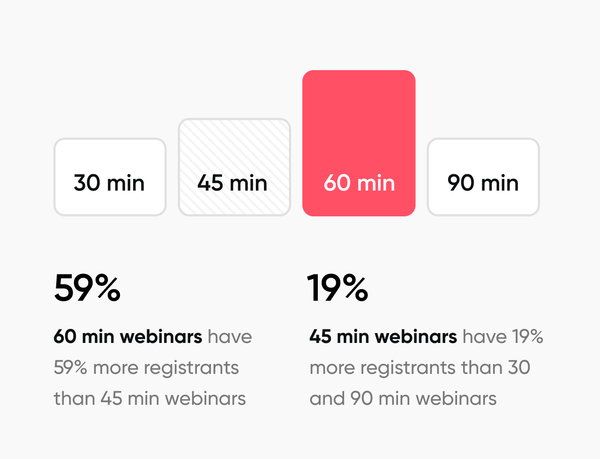
This intentional attention changes everything. You get sustained access to people who want to learn from you. They are not passively consuming content. They are engaged and ready to take action.
The data supports this. Webinar attendees convert at significantly higher rates than other channels. According to MarketingProfs, webinars can convert between 5 and 20 percent of attendees into paying customers, depending on offer type and audience quality. Compare that to typical landing page conversion rates of 2 to 5 percent (Unbounce Conversion Benchmark Report, Q4 2024). For more detailed benchmarks, review the latest webinar statistics and webinar conversion rates.
Building trust and authority with your audience in real time
Trust drives purchasing decisions. This is especially true for affiliate marketing, where you recommend products you did not create. Your audience needs to believe your recommendation is genuine.
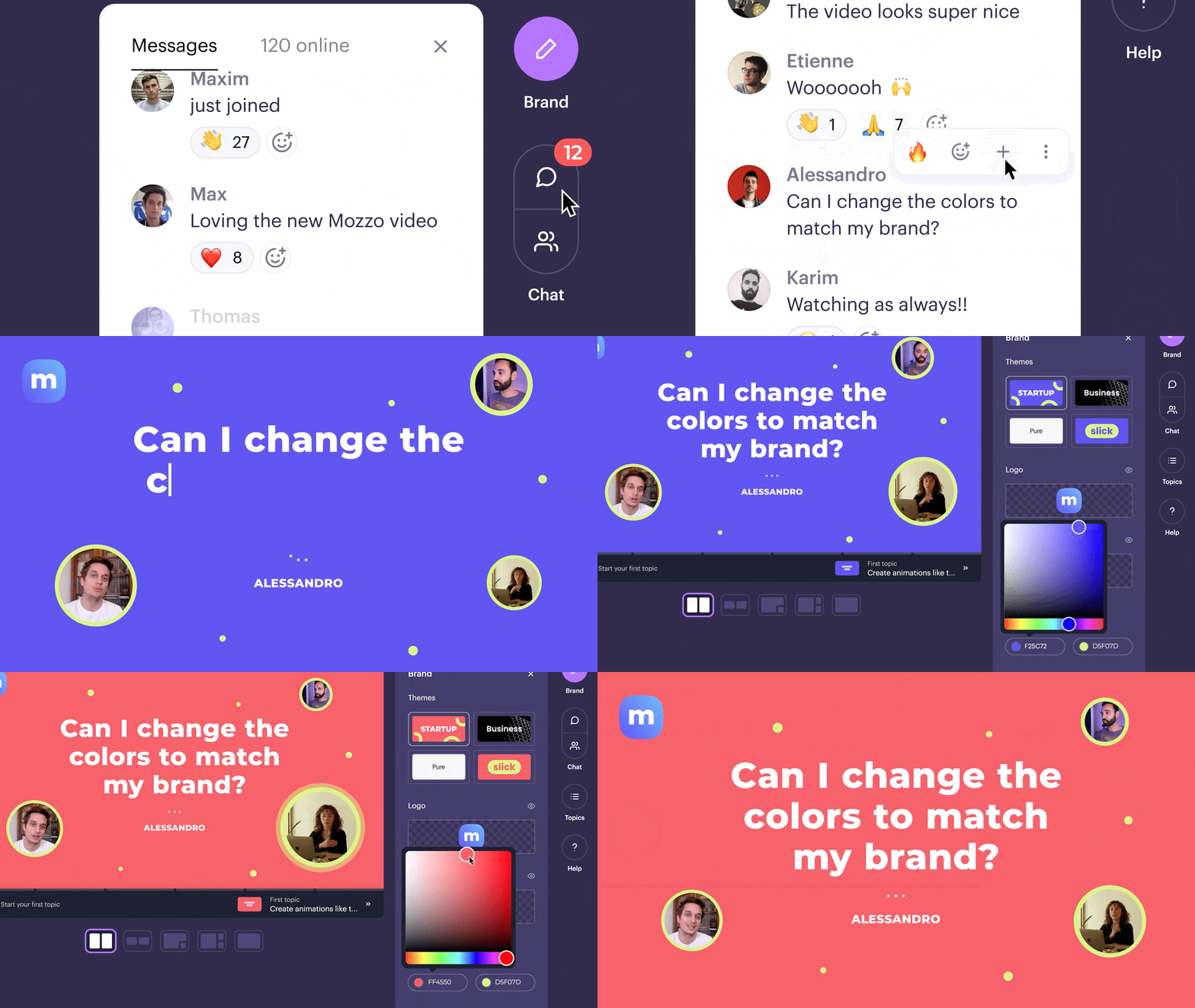
Webinars let you demonstrate credibility in real time. You answer questions, share your screen, and react to comments. This interaction transforms you from a faceless brand into a real person. The trust you build in one session would take months to establish through written content alone.
For affiliate promoters, this trust transfer is critical. When you recommend a product or service during a webinar, attendees have already seen your expertise. They understand your perspective and are more likely to act on your recommendation. Learning how to make a webinar interactive strengthens this connection further.
How webinars improve conversion rates for affiliate promotions
Webinars convert better because they address objections immediately. In a live setting, you can anticipate concerns, provide demonstrations, and answer questions on the spot. This removes friction from the buyer journey.
Consider how someone typically evaluates a software purchase. They read reviews, visit product pages, watch demo videos, and compare alternatives. This process takes days or weeks. With a webinar, you control the entire journey in one session. You frame the problem, present the solution, and guide the user toward a decision.
Live webinars also create urgency. When you offer bonuses or discounts exclusively to attendees, you tap into psychology that drives action. Even with replay options available, the live experience motivates people to decide now rather than later.
What budget and ROI to expect from your affiliate webinar strategy
Webinars have favorable economics compared to other marketing channels. Your main costs are time and a reliable platform. Unlike paid advertising, where costs scale with reach, a webinar costs the same for 50 or 500 attendees. According to eMarketer, US affiliate marketing spending will exceed $10 billion in 2024 for the first time, with double-digit growth projected through 2026.
Expect to invest 10 to 15 hours developing a well-structured presentation. This includes research, script writing, slide design, and practice. The upfront effort is significant, but the content can be reused indefinitely. A single webinar can generate passive income for months through automation and replays. Use a webinar ROI calculator to project your returns.
For realistic projections, plan for a substantial portion of registrants to attend live. According to Contrast webinar statistics, nearly 6 out of 10 registrants watch webinars on their platform. Additionally, close to half of registrants watch the replay. With solid conversion rates and decent commission structures, affiliate marketing webinars become highly profitable over time.
Success stories: how business owners use webinars to scale affiliate revenue
Many SaaS companies have built substantial revenue streams through webinar-driven affiliate programs. The approach follows a consistent pattern. Identify a product your audience needs, partner with the vendor, and deliver genuine value through educational content.


Stare Creating Affiliate Marketing Webinars
Free up to 30 registrants. No credit card needed.
Start for freeThe scale of this opportunity keeps expanding. Forbes' 2025 Top Creators report reveals that the top 50 creators earned $853 million collectively, an 18.5% jump from the previous year, with over 3.37 billion combined followers across platforms.
The most effective format is the problem-solution structure. You host a webinar addressing a specific challenge your audience faces. You provide actionable insights throughout. Then you introduce the affiliate product or service as the tool that implements your recommendations. This feels helpful rather than pushy.
Successful affiliate marketing webinars share one trait. They would be valuable even without the sales pitch. When your content stands on its own, the affiliate offer becomes a logical next step. Experts in this space consistently report that value-first webinars outperform hard-sell approaches. Review these webinar best practices to optimize your approach.
How to run successful affiliate marketing webinars
Understanding why webinars work is the first step. Execution determines results. The following sections cover the tactical elements that separate high-performing webinars from mediocre ones. For a comprehensive overview, consult the complete webinar marketing guide.
Each element builds on the previous one. Master these fundamentals and you will have a repeatable system for affiliate performance.
Defining your webinar goals and target audience
Clarity about objectives shapes every decision that follows. Vague goals produce vague results. A specific goal looks like this: generate 50 qualified leads and convert 10 percent to paying customers within 30 days. Setting clear webinar goals and objectives is essential.
Your goals determine content structure, calls to action, and follow-up sequences. Optimizing for immediate conversions requires different messaging than nurturing long-term relationships. Both approaches work. Mixing them creates confusion that hurts conversion rates.
Audience definition matters equally. Generic targeting wastes resources. Instead of marketing professionals, target heads of marketing at B2B SaaS companies with 50 to 200 employees who struggle to scale content production. This specificity improves every aspect of your webinar from examples to offers.
Live, automated, or hybrid: what is the best webinar format for affiliate promotions?
Each format serves different situations. Choosing the right one can double your results without changing your content. Understanding the differences between live vs automated webinars helps you decide.
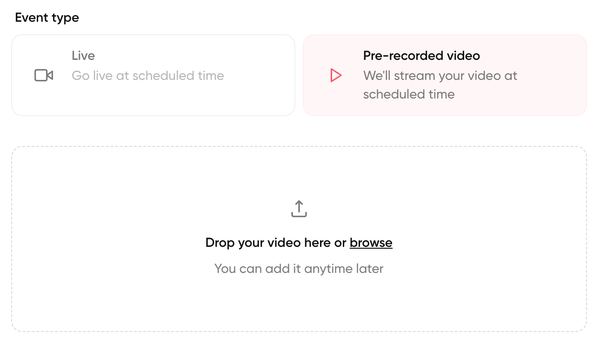
Live webinars work best for high-ticket offers and complex sales. Real-time interaction builds trust that recordings cannot match. You can pivot based on questions and respond to the energy of the audience. If you need to overcome significant objections, live sessions give you that flexibility.
Automated webinars excel when you have proven content and want to scale. Once you know what converts, why limit yourself to your schedule? Evergreen webinars generate commissions while you focus on other work. The key is maintaining engagement through smart use of polls, chat features, and timely email sequences.
Hybrid approaches combine both strengths. Run the presentation as a recording but host live Q&A sessions. This maintains personal connection while eliminating the pressure of perfect delivery every time. Hybrid events using this model have grown significantly in recent years.
Structuring your webinar content to keep your audience engaged
Most webinars fail because they front-load value and back-load selling. This creates an obvious transition that feels manipulative. Better structure weaves value and positioning throughout the entire session. A solid webinar outline prevents this mistake.
The goal is natural progression. Each section builds on the previous one. The affiliate offer emerges as a logical conclusion rather than an abrupt pivot. Attendees should feel informed and ready to act, not sold to.
Balancing value and promotion in your presentation
A 70-30 ratio works well for most affiliate marketing webinars. Seventy percent of your content should deliver pure value. The remaining thirty percent positions your affiliate product. But that thirty percent should not cluster at the end.
Distribute product mentions throughout your content. When discussing a challenge, mention how the affiliate tool addresses it. When demonstrating a framework, use the product you are promoting. Every reference should feel like education, not interruption. Follow a proven webinar script template to maintain this balance.

The mindset shift matters. You are not selling. You are recommending a solution to a problem you have spent 30 minutes explaining. When attendees understand the problem deeply, your recommendation feels helpful.
Using real-life case studies and success stories
Concrete examples outperform abstract concepts. Case studies transform your webinar from lecture to story. Stories hold attention and make information memorable.
Effective case studies follow a simple structure: situation, challenge, solution, results. Start with a scenario your audience recognizes. Build tension around the problem. Introduce the affiliate product as the turning point. Close with specific, measurable outcomes.
Show attendees exactly how the product solved a problem they have right now. When they see themselves in your case study, resistance drops. Include real numbers and user feedback whenever possible. Your presentation materials should support these stories with visual evidence. These webinar engagement strategies help capture audience attention throughout.
Timing and frequency: how far in advance should you promote?
Promotion timing affects registration and attendance rates. Start too early and people forget. Start too late and calendars are full. The sweet spot for B2B webinars is 10 to 14 days of active promotion. Research the best time and day to host a webinar for your audience.
Structure your promotional calendar intentionally. Announce and open registration at day 14. Send reminder emails at days 7, 3, and 1. Include a final reminder one hour before the event. Each touchpoint increases show rates, which directly impacts revenue. Understanding when to promote your webinar maximizes registrations.
Frequency requires restraint. One well-executed monthly webinar outperforms rushed weekly sessions. Your audience has limited attention. Spend it wisely. These tips apply whether you work alone or manage a team.
Building a high-converting affiliate webinar funnel
A webinar is one component of a larger system. The funnel starts before registration and continues long after the live session ends. Each stage requires attention. This webinar funnels guide covers the complete framework.
The following sections cover what happens before, during, and after your webinar. Together, these elements determine your affiliate performance.
Pre-webinar: driving registrations with affiliate links and paid ads
Registration is your first conversion. Your landing page must sell the webinar, not just describe it. Focus on the transformation attendees will experience. Highlight the specific problems you will solve. Establish credibility that makes you worth their time. Learn to build a webinar registration page that converts.
Paid advertising can scale your registrations if you have validated your presentation first. Running ads to an unproven webinar wastes budget. But once you know your conversion rates, paid traffic accelerates results. Start with retargeting audiences who already know your brand. Expand to lookalike audiences as you optimize your campaign.
Use your affiliate link in pre-webinar content. When someone registers, send preparatory materials that naturally include your links. Some prospects convert before the webinar happens. This approach helps you earn commissions earlier in the funnel. Effective webinar promotion and webinar social media promotion drive consistent registrations.
During the webinar: maximizing engagement and conversions in real time
The live session is where preparation pays off. Your job is maintaining energy and engagement from the first minute to the last.
Start strong. The first five minutes determine whether people stay or leave. Open with a compelling statement about what attendees will gain. Set expectations clearly. Give them immediate reason to pay attention. Avoid lengthy introductions that kill momentum. A strong webinar introduction script sets the right tone.

Use engagement tools strategically. Webinar poll questions provide valuable data you can reference throughout your presentation. Webinar Q&A sessions should happen throughout, not just at the end. When attendees participate, they invest in the outcome. Invested attendees convert.
Your call to action deserves careful delivery. Build to the offer naturally. Present it clearly. Create urgency through genuine scarcity. Make it easy for attendees to take the next step. Optimize your webinar CTA for maximum impact.
Post-webinar: follow-up sequences that drive revenue
Most conversions happen after the webinar ends. Your follow-up sequence is essential infrastructure, not an afterthought.
Send the replay within 24 hours to everyone who registered. Include a clear call to action and any time-sensitive offers. Follow up at 48 hours with additional value. Summarize key points or answer common questions. Your webinar follow-up emails should follow a proven webinar email sequence.
Attendees who did not convert are not lost. They are warm leads who need more information or time. Continue providing value over the following weeks. Invite them to future webinars or make soft pitches for your affiliate product. Collect user feedback through post-webinar survey questions to refine your approach.
What tools are needed for affiliate webinars?
Your technology stack affects the attendee experience and your results. The right tools remove friction and let you focus on content and connection.
The following sections cover platform features, tracking capabilities, and integrations that matter most for affiliate marketing webinars. Choosing the best webinar software is foundational to success.
Essential webinar platform features for affiliate marketing
Not all webinar platforms suit affiliate marketing purposes. Look for features that support conversion, not just broadcasting. The best webinar software for marketers prioritizes these capabilities.
Registration capabilities matter. Your platform should offer customizable landing pages, email confirmations, and reminder sequences. Branding options help maintain professional appearance throughout the attendee journey.
Interactive features: polls, Q&A, and live chat
Engagement features serve two purposes. They keep your audience active. They also provide data about what resonates with attendees.
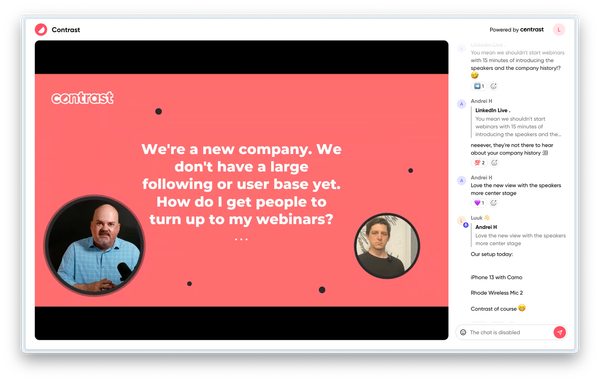
A well-timed poll can segment your audience in real time. This lets you tailor your pitch based on their responses. Interactive webinars increase the perceived value of attending live versus watching a replay.
Live chat creates community and social proof. When attendees see others engaging, asking questions, and expressing interest, it validates their decision to attend. This collective energy enhances the online experience in ways recordings cannot replicate.
In-webinar CTAs and engagement tools
Your platform should support clickable calls to action during the presentation. The ability to display your affiliate link at the right moment significantly impacts conversion rates.
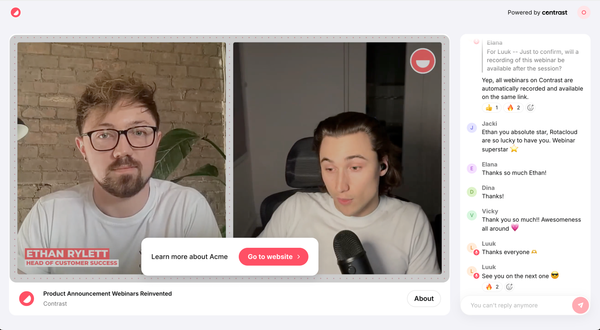
Look for customizable CTA buttons and overlay options. Integration with your tracking systems ensures accurate attribution. The service you choose should make these features accessible without technical complexity. Review event marketing tools that support these capabilities.
Tracking and analytics: how to attribute affiliate sales to your webinar
Measurement enables improvement. Proper attribution helps you understand what works and scale what converts. Robust webinar analytics are essential.
At minimum, track registration rates, attendance rates, engagement metrics, CTA clicks, and conversions. Connect your webinar platform to your CRM to follow the customer journey beyond the live session. Most affiliate programs provide UTM tracking or unique coupon codes for attribution. Learn how to use UTM parameters for accurate tracking.
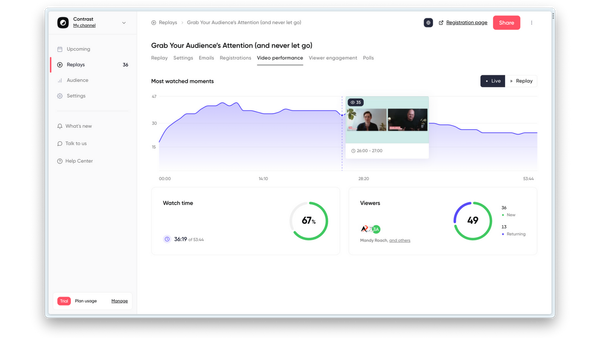
Advanced analysis segments results by traffic source, registration date, and engagement level. This granularity reveals patterns. You might discover that live attendees convert better than replay viewers. Or that organic search registrants have higher lifetime value than paid traffic sources.
CRM and marketing automation integrations
Manual processes limit scale. Your webinar platform needs seamless connection to your marketing stack.
This means automatic contact creation in your CRM when someone registers. Real-time engagement data should sync as attendees interact with your content. Trigger-based automation should activate based on specific behaviors. Explore HubSpot webinar integrations and how to use HubSpot integration for seamless workflows.
When someone clicks your affiliate link during the webinar, your CRM should know instantly. When someone watches most of the replay, they should enter a specific follow-up sequence. These automated workflows turn single events into systematic revenue generation. The right service integration makes implementation straightforward.
Key metrics to measure affiliate webinar performance
Data-driven decisions separate guesswork from strategy. The following sections cover metrics that actually matter and the benchmarks to target. Understanding these webinar metrics and webinar KPIs helps you improve systematically.
Understanding these numbers helps you identify improvement opportunities and demonstrate ROI to stakeholders.
Registration rate and attendance rate: industry benchmarks
Registration rate depends on traffic quality and landing page optimization. Cold traffic typically converts at lower rates, while warm audiences perform significantly better. Strategies to increase webinar attendance directly impact your bottom line.
Attendance rates vary based on your audience and promotion strategy. A well-optimized webinar program can achieve attendance rates above 50 percent, according to Contrast webinar statistics. If your numbers fall below expectations, investigate your reminder sequence and the time gap between registration and event. Webinar reminder emails play a critical role. These are key indicators of affiliate performance.
Engagement metrics: polls, chat activity, and watch time
Engagement predicts conversion. Track how many attendees participate in polls and ask questions. Monitor how many remain present through your call to action.
Drop-off patterns reveal content issues. If a significant portion of your audience leaves early, something in that section needs work. Average watch time matters more than attendance numbers. Someone who watches most of your webinar is far more likely to convert than someone who leaves after a few minutes. Review webinar benchmarks to contextualize your results.
Optimize for retention. Each additional minute of engagement increases conversion probability.
Click-through rate and conversion rate on affiliate links
CTA click-through rates vary by offer and audience. According to MarketingProfs, approximately 25 percent of webinar attendees click on call-to-action links during a session. If your rates fall significantly below this, your offer presentation needs improvement. If clicks are high but conversions are low, the issue likely lies with the affiliate product's sales page.
Final conversion rates depend on product price, audience warmth, and offer strength. MarketingProfs reports that webinars can convert 5 to 20 percent of attendees into paying customers. Lower-priced products and highly engaged audiences convert at higher rates. Deep dive into webinar conversion rates for detailed analysis.
How to use data to optimize future webinars
Data without action wastes opportunity. Build a systematic review process after each webinar.
Analyze what worked and what underperformed. Identify where engagement peaked and where it dropped. Look for patterns across multiple sessions.
A/B test one variable at a time. Change your opening hook, offer structure, or follow-up sequence. Small improvements compound over time. A 10 percent improvement in attendance combined with 10 percent improvement in conversion yields 21 percent more revenue from the same registration volume. This is how you run effective campaigns that deliver consistent growth.
Integrating webinars into your broader marketing strategy
Webinars perform best as part of an integrated system. They should connect to your other channels and support your overall marketing strategies. Review comprehensive event marketing strategies to see how webinars fit into the bigger picture.
The following sections cover how webinars interact with email, social media, and your sales funnel.
Webinars and email marketing: building synergies
Your email list and webinar program should reinforce each other. Existing subscribers trust you, which improves registration and attendance rates. Every webinar should grow your list. Every email sequence should eventually lead to a webinar. This aligns with inbound marketing principles.
Webinar content fuels your email strategy for weeks. Key insights become newsletter content. Attendee questions become blog posts. The recording can be gated for lead generation. This benefit extends across your entire content operation. Your content strategy should incorporate webinar assets.
Leveraging social media and retargeting for webinar promotion
Social proof drives registrations. Share attendee counts and testimonials from previous sessions. Post behind-the-scenes preparation content. Create anticipation before the event.
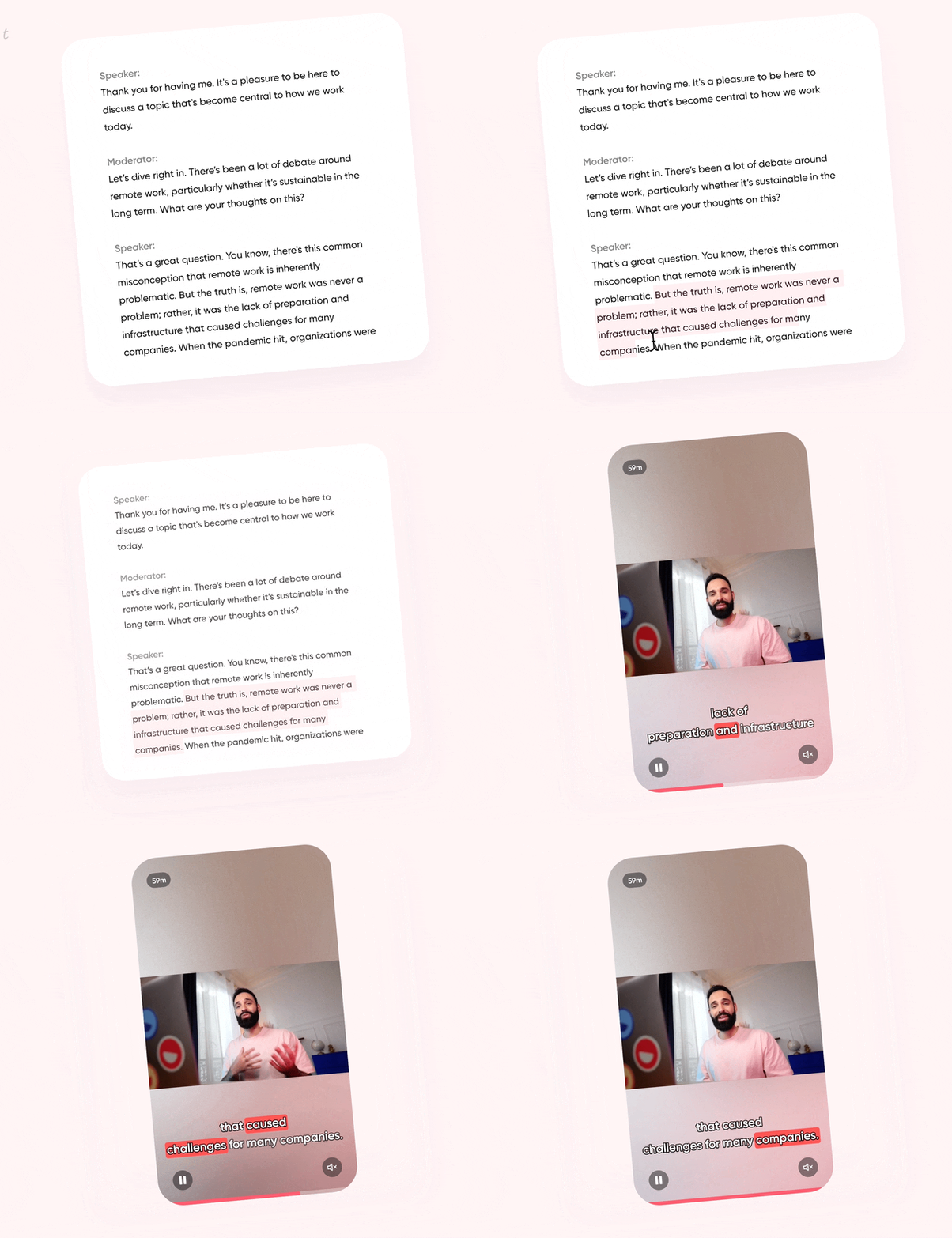
Retargeting is particularly powerful for webinars. Someone who visited your registration page but did not sign up has shown intent. A well-crafted retargeting campaign can recover a meaningful portion of these prospects. Performance marketing tactics like this significantly boost overall results.
Aligning webinar content with your overall funnel
Every webinar should have a clear position in your customer journey. Top-of-funnel webinars educate and build awareness. Middle-of-funnel webinars compare solutions and overcome objections. Bottom-of-funnel webinars close deals with demonstrations. Understanding what is demand generation helps you position webinars correctly.
Match affiliate products to appropriate funnel stages. High-ticket solutions rarely convert with cold audiences. Warm prospects with value-first webinars before introducing affiliate offers. The creator economy fueling these partnerships is on a strong growth path. A Goldman Sachs report cited by Retail TouchPoints predicts it could reach $480 billion by 2027, nearly doubling from current levels. This strategic alignment separates effective marketing strategies from scattered tactics. Explore webinar lead generation techniques for each funnel stage.
How to choose or launch an affiliate program
Strategic selection dramatically impacts results. Whether you join existing programs or build your own, the following guidance applies.
Understanding commission structures and partnership dynamics helps you maximize returns on your webinar efforts.
Evaluating existing affiliate programs: commission models and revenue potential
Not all affiliate programs deserve your time. Evaluate programs on commission structure, cookie duration, product quality, and brand alignment.
Recurring commissions are attractive for SaaS affiliates. A 20 percent lifetime commission on a $100 monthly product generates $240 per customer per year. This exceeds most one-time bounties. Look for programs with proven conversion rates and solid reputations. The potential to earn ongoing income makes these partnerships especially valuable.
Cookie duration matters more than most realize. A 30-day cookie works for impulse purchases. Complex B2B sales need 60 to 90-day windows to capture full decision cycles. When you refer a prospect, you want credit for the entire journey.
When and how to create your own affiliate program
If you have a product worth promoting, affiliates can become your most cost-effective sales channel. You only pay for results. You gain access to audiences you could not reach alone.
Launch when you have confirmed product-market fit, reliable conversion processes, and bandwidth to support partners. Premature programs frustrate affiliates and damage relationships. Provide proper training and resources to help partners enhance skills and maximize their success. Consider using webinar training software to onboard and educate your affiliate partners.
What are the challenges in affiliate marketing webinars?
Every strategy has obstacles. Acknowledging challenges helps you prepare rather than react. Avoiding common webinar mistakes saves time and revenue.
Create affiliate marketing webinars with Contrast
Start for free up to 30 registrants. No credit card needed.
Start for freeThe following sections cover common problems and how to address them.
Common mistakes: over-promoting without delivering value
The fastest way to fail is making your webinar feel like an advertisement. Audiences recognize pure sales pitches immediately. They leave or tune out.
Lead with genuine value. If your webinar would be worthless without the affiliate pitch, you have created an ad, not educational content. Focus on helping attendees learn something actionable. The sales opportunity follows naturally.
Poor follow-up and nurturing sequences
Many webinar hosts obsess over the live event and neglect what happens after. This leaves revenue on the table.
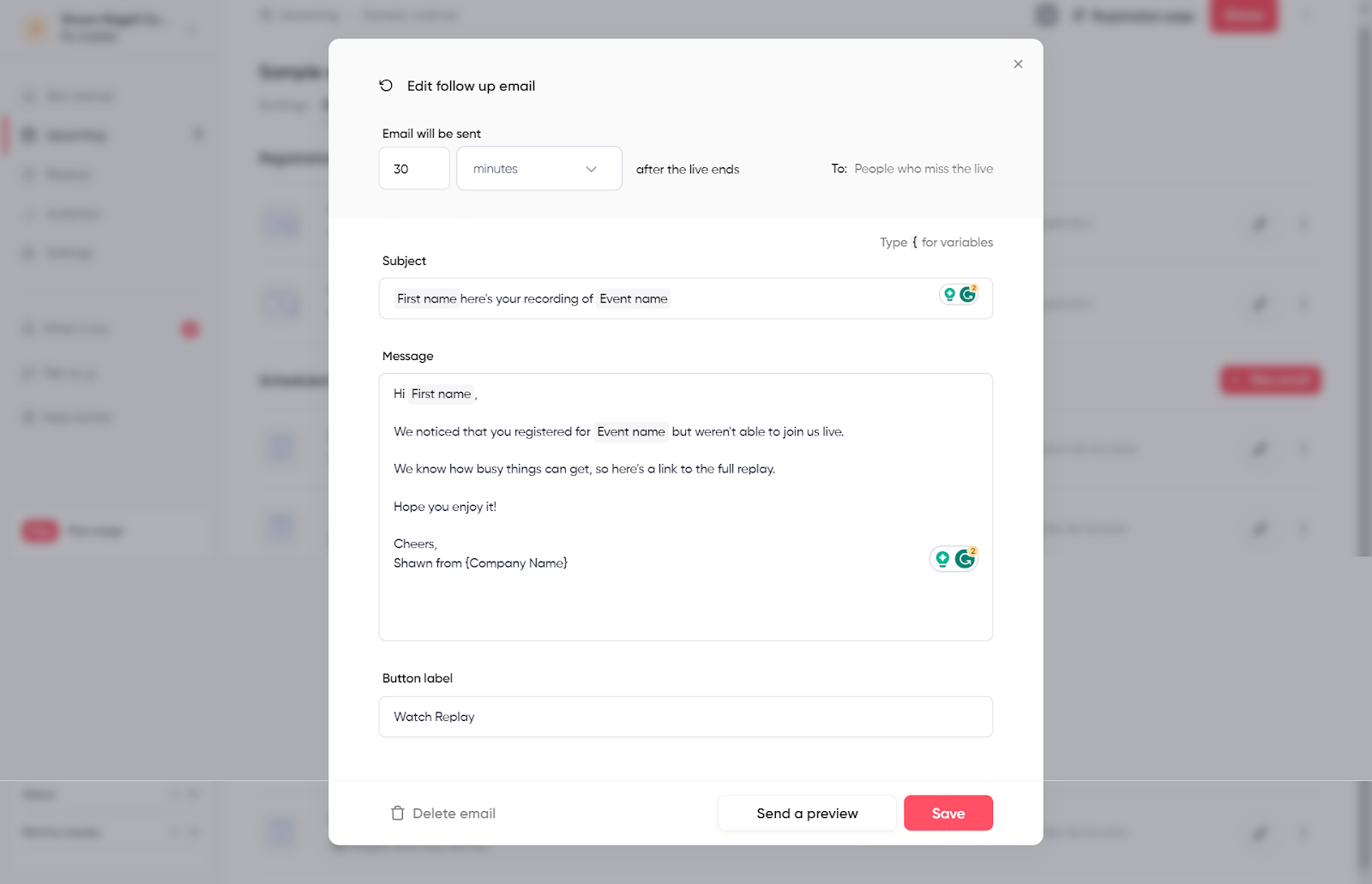
Build follow-up sequences before hosting the webinar. Know exactly what happens at day 1, day 3, and day 7. Test different approaches. Track what moves people to action. Incorporate feedback from previous campaigns to improve continuously. Effective webinar follow-up emails recover conversions that would otherwise be lost.
Compliance and disclosure: legal requirements for affiliate webinars
Affiliate marketing has legal obligations. FTC regulations require clear disclosure of affiliate relationships. Violations result in serious penalties.
Disclose early and clearly. A simple statement at the beginning suffices: I may receive a commission if you purchase through my links. This transparency builds trust rather than diminishing it. Ignoring regulations creates unnecessary risk.
Managing affiliate relationships at scale
As your program grows, managing multiple partnerships becomes complex. Different products have different commission structures, reporting requirements, and promotional guidelines.
Invest in systems early. Use affiliate management software to track performance across programs. Create templates for presentation materials to adapt quickly for new partnerships. A dedicated team member helps maintain relationships as you scale. Proper webinar management streamlines these processes.
What is the future of affiliate marketing webinars?
The landscape continues evolving. Staying ahead of trends positions you for continued success.
The following are emerging developments worth watching.
Emerging trends in digital marketing and webinar technology
Interactive elements are becoming standard. Expect more sophisticated engagement tools. AI-powered Q&A and personalized content paths based on viewer behavior are already emerging.
The line between live and automated continues to blur. Virtual presentations with live interaction layers offer compelling hybrid experiences. These scale without sacrificing authenticity. The growth in this space has been substantial. Explore how to repurpose webinar content using AI and how video marketing is evolving.
How AI and automation are shaping the potential of affiliate webinars
AI is transforming every stage of the webinar lifecycle. Content creation, attendee analysis, and follow-up personalization all benefit from intelligent automation. Tools like Contrast AI streamline webinar workflows with AI.
The most exciting applications involve real-time optimization. Presentations that adapt based on audience engagement are now possible. Content that emphasizes points resonating with attendees and skips material that falls flat improves results automatically.
However, this efficiency comes with responsibility. Advertising Week notes that the tension between personalization and privacy will remain critical in 2025, pushing marketers to prioritize transparent and ethical AI practices to maintain consumer trust.
For forward-thinking marketers, the opportunity is adopting these tools early. Efficiency gains compound over time, creating sustainable competitive advantages. Those who explore these capabilities now will lead their markets.
Conclusion
Affiliate marketing webinars represent one of the highest-leverage strategies available today. They combine attention, trust-building, and conversion optimization in ways other channels cannot match.
Success requires intentional effort across the entire funnel. Compelling content, strategic promotion, engaging delivery, and systematic follow-up all matter. For those willing to invest in execution, the returns justify the effort.
Start with one webinar. Perfect it. Then scale through automation and optimization. The recurring commissions that follow make the initial investment worthwhile.
As affiliate marketing matures alongside AI capabilities, one question will define the next era: can automation scale trust without eroding authenticity? Adweek's 2025 Brandweek coverage suggests the answer lies in a "human-driven, AI-assisted" model where technology amplifies—but never replaces—the human connections that drive purchasing decisions.
Interested in learning more about the best webinar platform for affiliate marketing? Then book a demo to learn more about Contrast.